Thursday, October 26, 2006

RECENT HIGHLIGHTS

NOT A TIGER BEETLE
This 3/4th inch incredibly colorful beetle was a complete surprise to me. I shot it just before I built the Phoenix adapter with my old lens. I have never seen this beetle before and have yet to identify it. IT IS NOT a regular Tiger beetle. Tiger beetles are hunters, large and fast. This beetle is more related to the long-horned beetles by it's body type. I will have to get back on this one--it's a once in a time shot and was quite a find. Click on it for bigger view.

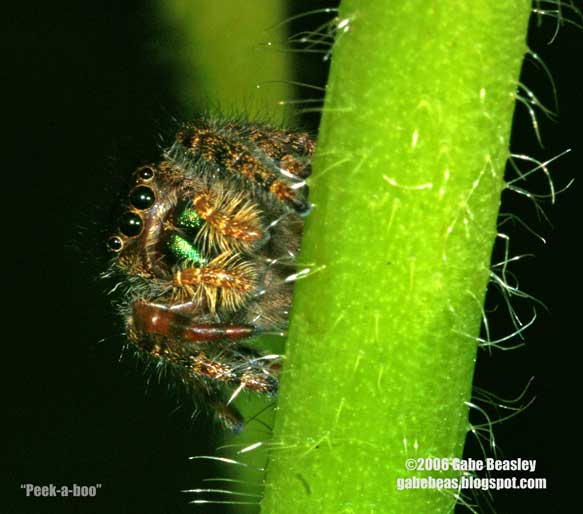
I re-touched this with Virtual Photographer, and awesome little plug-in for Photoshop. It is very easy to download. I'm not sure of the URL so just google it if you want to enhance your shots. It lets you re-touch pictures with amazing flexibility and it's entirely free. A tool inside Photoshop with more power then some photo-editing programs and tons of abilities. Compaire this tiny jumping spider shot with the Phoenix adapter down below before I started useing Virtual Photographer. (I did do some other touch ups on this picture without it as well)

Tuesday, October 24, 2006

NEW PHOENIX LENS ADAPTER PICTURES

These pictures I took yesterday show how the Phoenix adapter and my good optics really are working. I am sick of flies--so I thought I'd start this off with an inchworm. This inchworm has a weird experience I will tell you about later.

I DECIDED TO MAKE THIS SEQUENCE WITH FEW WORDS AND BIGGER PICTURES--SOME OF THEM ARE IN HIGH-DEF---CLICK ON THEM TO SEE FULL SIZE! DON’T FORGET HOW TO GET BACK TO MY WEBSITE, USE YOUR INTERNET BROWSERS < -- ARROW BUTTON ON THE LEFT HAND SIDE AT THE TOP OF YOUR SCREEN.


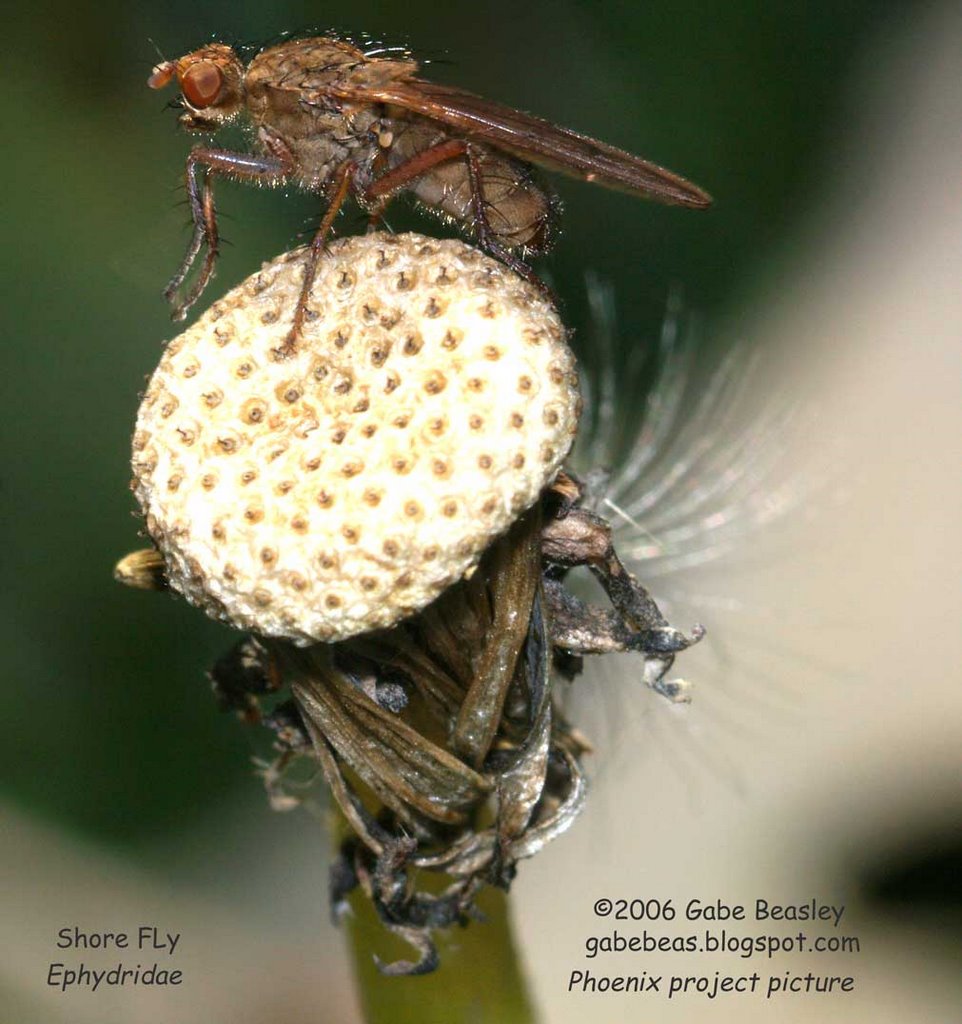
This is an example of size as well as the ability to shoot from more then a foot away. This tiny fly on a dandy lion is about 7mm long.


A real warrior of the back yard--this is a Harvestmen. They resemble crabs more then spiders if you take a closer look. They are NOT SPIDERS, although often called daddy longlegs they do not spin silk or exclusively eat pray. I have little knowledge of them--but they can be very interesting. I believe they forage and scavenge. One book I recall reading told they eat more vegetable matter then other stuff. Many can be found running as fast as they can in my back yard these days. Finally I can photograph them better since I can get so far away. This guy has been in some fights--a spider web or spider probably got a hold of it's leg and it released it. Whatever happened they are hardy and amazing little things. Some can be much larger-- You REALLY want these in your garden. They are completely harmless--and cannot bite and do not have any venom.


Here she is again. Fighting for her life. Notice the similarities of the legs and abdomen to large aquatic crabs. They have a completely fused thorax and abdomen and only two eyes fixed ahead up on a small bulge you can see. Some species take this to the extreme with very long eye fixtures to allow for more visual ability.

One eye can be seen here above the word on the left of this picture. The other eye is on the other side. It's black looking and like spiders, has simple eyes more like ours then insects.


This is that inchworm story I wanted to tell you about. That fly looking thing up there is probably a male aphid. Aphids are literally born pregnant. But every now and then individuals with wings (If I recall males only) sprout out of a large colony to find another one. This insures that they are not all clones. Why it landed on this inch-worm I'm not sure--but some species of caterpillars are known to feed ants--it could be a connection with food.

And here it is--it sat there just long enough for me to finish this picture.


Then it went down here and flew off. It's definitely an aphid. And probably was not aware of the inch worm which clearly was startled.

Ok, back to the flies--that's one kind of insect that is always around here. This is a hover fly I shot while it was cleaning it's huge compound eyes.

Another hoverfly--my bellows focused right on to this dandelion flower--the tiny hoverfly did not mind me being as far away as I could. I have had to train myself to not take too many pictures of a good thing since I got the upper hand on the bugs now shooting from almost any distance I want.


This is about the highest resolution fly picture I have done yet. It is not as good as it could be with better lighting and light angles--as well as more light. This file had to be imported and brought up in RAW--without RAW it would not have turned out too well. Having to keep all this gear going I shoot RAW for mistakes like this but archive in JPEG.


Is this the best fly? I'm not sure. Hopefully as I will soon find out, the higher definition will let you see more then my usual on these pictures. I wanted to show how my lens worked. The truly full sized files are way too large to put on my website but I made these larger then normal.


A lady bug, two spots. Honestly I don't know how the spot thing works. There are tons of ladybugs here--I recall seeing one with no spots. Something I should look up. At least it's not another fly or bee!

A note here--PEOPLE MAY THINK that the end of this page is the end of my website. NO way! Please enjoy looking at 500+ more pictures under each month under “all pictures” at the top right hand side of my website. I must archive my pictures like this in order to keep you from having to wait hours to load my site. I have a lot more then just bug pictures! Check it out.

Sunday, October 22, 2006

MY ADAPTER--A SUCCESSFUL "PHOENIX"

A couple of weeks ago my main wildlife lens died. It was splashed with too much sports drink and stopped at F22 forever. I did my best to try to repair it but after nearly completely disabling it, I found that the aperture was probably too fragile to clean. At the time it was really bad for me. I had no idea I was about to open up the power of the best of serious lenses. So the lens was shot--and cheaper to buy a new one then to have it fixed or close enough. So instead of adding it to my junk pile I used it to build a system I would find to be the next level past anything I have ever done--and I had one of my greatest days in my history of “build- your own" stuff. I have long told you about the fact I build my own lenses. Much knowledge allowed me to build an adapter that can catch a fly at five feet away almost as optically clear as the one above. The days of extreme crops are over! The adapter I build puts me in a new league and my pro-macro kit for my Pentax got a new life in digital. Check this out. And don't forget to click on them to see a bigger sharper shot. It is soon going to be winter.

THERE IS NO COMMERCIAL "PHOENIX" ADAPTER! YOU CANT BUY IT!
I BUILT THE THING!
I got several emails and comments from people who did not read the text and assumed I'd bought this rig. READ the texts. Most of the pictures on my site were taken with unconventional home brew optical systems I put together completely myself and added to existing cameras or lenses. I still have a lot of practice needed on this rig. It will take continued testing to learn how to use the adapter and hold some of the heavy lenses and rigs it needs. I invented and called the "Phoenix" because it used the mount that was for the wildlife lens that broke. From the ashes of a disaster arose a whole new set of abilities! Now I'm glad that expensive lens broke because I would have never invented this lens without this situation and it may have been years before I could afford to get lenses like this or break a lens by accident and discover it. I invented this system and know it can be done again. These first few shots--are not much and only slightly show what is possible. This thing has the power to take very extreme macro shots and depth of field chances far higher then f22. Like Earthquakes, one stop over f22 is multiplied mathematically. By the time you reach f30 you can't even take a picture on the most sunny of days without very long exposures and or iso numbers pushing way past 1600.
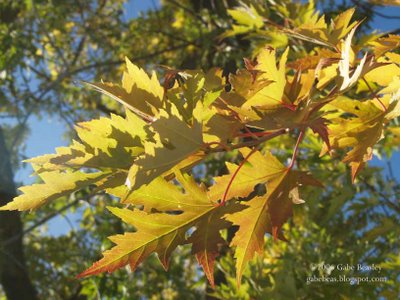
"Fall is not falling yet"
Generally, if I see something I like, I take a picture of it--even if I have to keep switching lenses. Although this sequence of pictures is supposed to be about the incredible adapter I built, I thought I'd add some more "normal" shots.
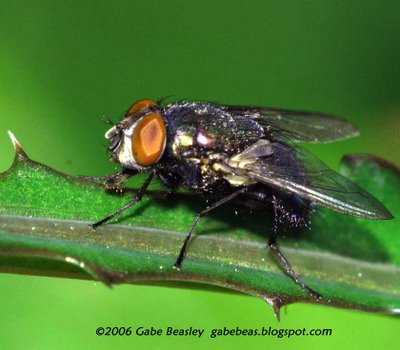
This fly made me say "I won't ever swat a fly again" when I captured it's image from over a foot away making it easy. I wish there were more insects here in The Dalles to photograph. Flies are not any particular special interest to me and I've swatted a few in my time--but there are tons of them out here in The Dalles and I have done two many bee shots. I can't wait for my trip to Guam where I may be able to finally for fill a childhood dream of taking tropical pictures of spiders and insects.
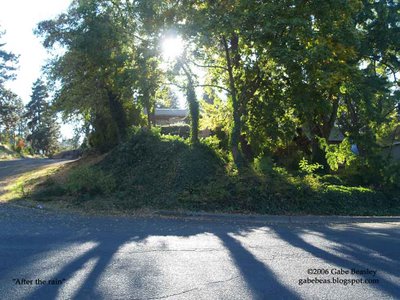
It does not rain often here, so when it does the camera comes out with the sun quick, even if I'm having a bad day. Finally I am registered enough with local police department that I can walk around without being stopped. I've got to say I am glad the cops are suspicious. I am glad people are vigilant. My first digital camera and laptop was stolen and it took me years to recover. My business cards are my badge to walk around taking pictures. Remember to take ID if you do--many people may be suspicious of you and call the police. Just be decent and honest and you will be fine. I've been questioned a half dozen times or so for walking around with a big camera in residential areas.
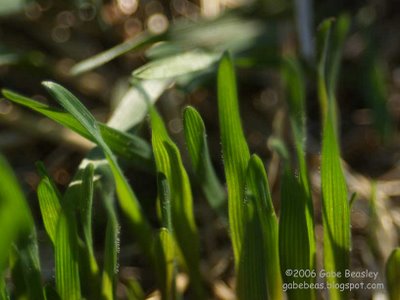
Out of focus water droplets suggest the presents of "spirit orbs" or Ghosts, in this picture. You know--being a photographer I really get a kick out of those people who think an out of focus peace of dust is there long dead great grandpa or something. Why the heck would he look like that? I am undecided on most supernatural subjects but with a background in electronics and photography I notice allot of this stuff. Some of it is definitely bunk. Some of the best UFO shots were hub caps thrown in the air and a nice quick sunny snapshot.
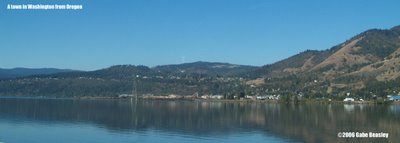

My digital SLR is supposed to be comparable to a medium format studio-style film camera. It is a bit better then a very expensive 120 film camera. According to some photographers. I am able to do landscapes like this only with a lot of room. Wide angles can be done several ways. This shot was possible with just my main lens at a wide angle most of all because of the distances here. This is the Columbia river. This panorama is actually a crop. I could not put the whole small town on the picture because I took this quick. However details can be made out in the full-version but unfortunately I also cannot put the full-res version on my website. Just one full size picture would take up much more space on line then all these shots on this post combined.
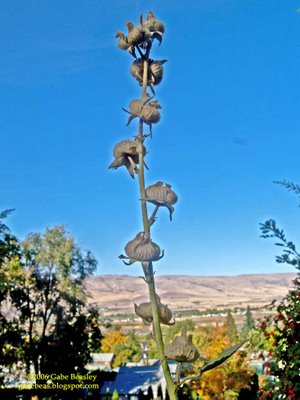

Notice how this photo at least to me seems to imitate really old color film. I have several books that talk about early color processing. I fell for it by accident. I wanted the buds to be visible. Your looking at Washington state in the background. This is a real natural shot--the buds were not inserted as it might look and the angle I had to hold my camera at was very painful after a while. Nobody usually knows how much us photographers--amateur or pro--go through to bring you this pictures! You got to have a quick mind and a be willing to get in lots of pain, close calls, and very quick nerves and more to get your shot--AND protect your gear. If a car drives by while your changing lenses--you might need to send your camera in to be cleaned! These days taking good pictures is easy and common. Feeling like you can and should call yourself a Photographer is not. It takes more then a camera and a few good pictures. That's how my humble self sees it. Taking pictures often involves holding a heavy camera for a long time. However with my condition (Pancreitius and the pain it causes) I have learned that I can do it well and it is a very possible thing for me to do since I got out of the hospital. No heavy lifting--I am glad I was not really into stuff like sports.
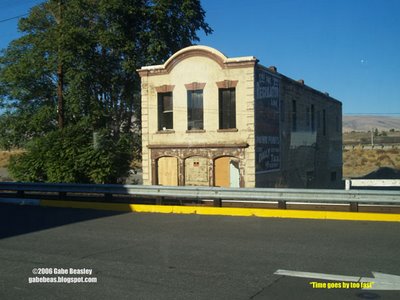

This is another kind of photography pain. Knowing what might happen to your subject. I really hope they don't blast this building. The Dalles has a rich history but all I see is our country attitude (like none of those automatic checkout machines and stuff) is going away. Google is moving in to town. I only like that for one reason--more jobs is good. I took this shot while waiting for a Greyhound bus so I never went over and looked at it more. I'm not sure what it is but I have a guess since it's on the old rail road it might be some kind of old rail station. I kept the highway in the picture rather then crop--to show how times have changed.
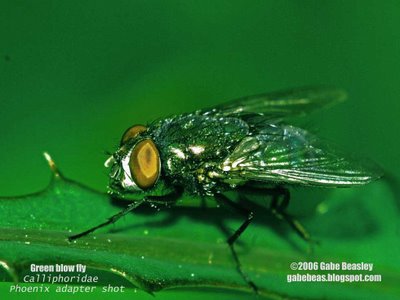
This is a green blow fly. It is possible in the full version to see the fungus growing on the hairs with my gear. I can't change lenses fast enough for every shot--but this one I got several versions of showing how flies feed--something I will probably post later.
This grumpy looking jumper is deceptively small--it's a baby. When full grown it will be about twice it's size (about 7-10mm). The adapter I have lets me take pictures from distances that are great. Usually more then one foot away. Using the one of my adapters I could have shot this from five feet away--but that is deceptively nice. Trying to find a tiny spider from that distance and keeping the camera stable is nearly impossible. So it's not usually practical or useful. I have several distances--one to two feet depending on the subject is the usual. Before I invented this adapter system I was only able to shoot the regular 6-7 inches away. Most simple macro photography is capable of no further and many lenses are built for that.
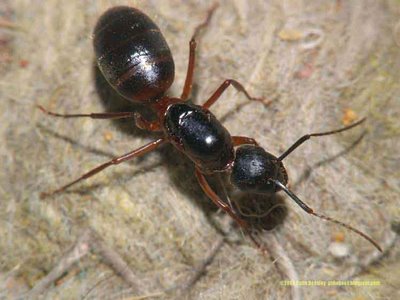

This is a carpenter ant. Click on it for a larger view--Don't forget--to get back to my
Website click your back arrow button.


HOW A FLY THAT LOOKS LIKE A BEE CLEANS IT'S WINGS
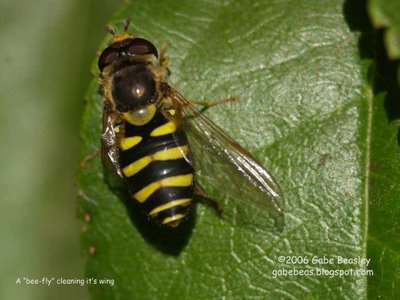
I saw this fly land and shot it from about one and a half feet away. I got in to about one foot and got a higher shot to capture it's cleaning techniques.
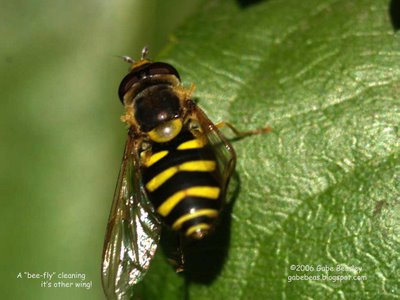
First one wing, now the other.
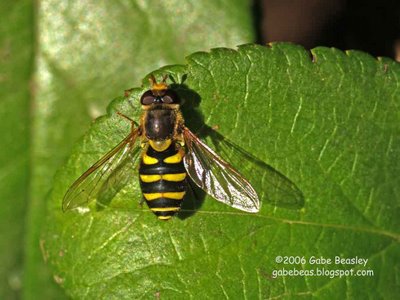
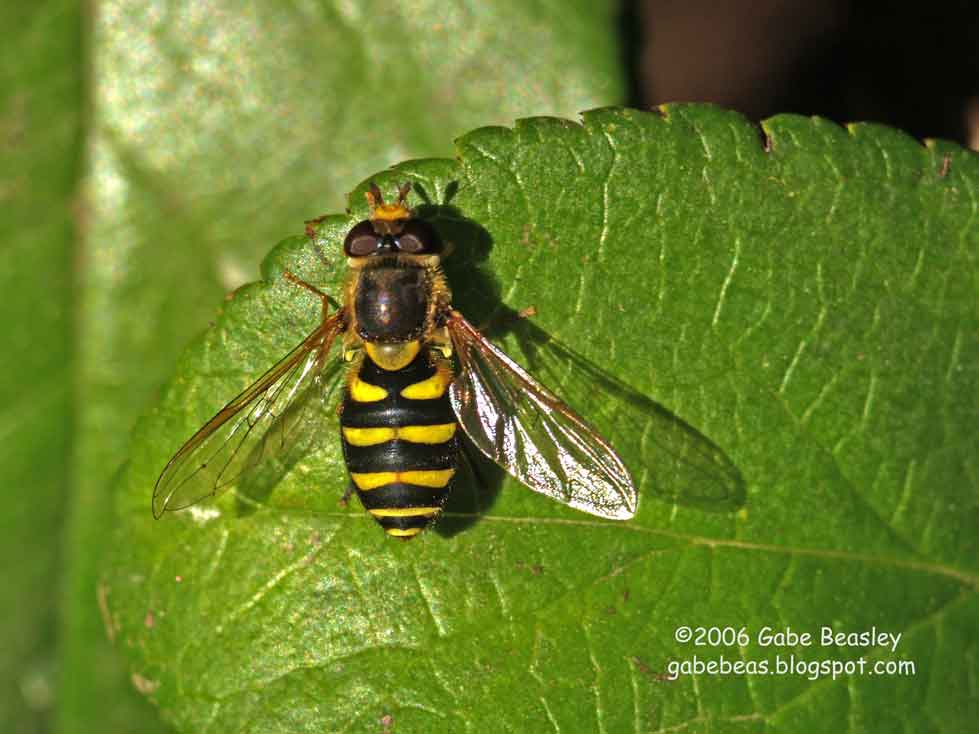
And then you got one clean fly. This is a hover-fly often called a "bee fly" because it looks like a bee. It has however no sting, and bares these colors to have the confidence of a bee or hornet.
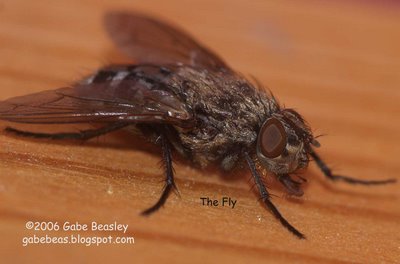

I can hit f32-34 with one of my macro lenses. But usually I have to stick to something more lower since I don't have a massive flashgun. In the future these pictures will improve as I get better at using my gear. And better gear. The adapter requires me to both operate my digital SLR and set the f-stop on the lens I am using manually.
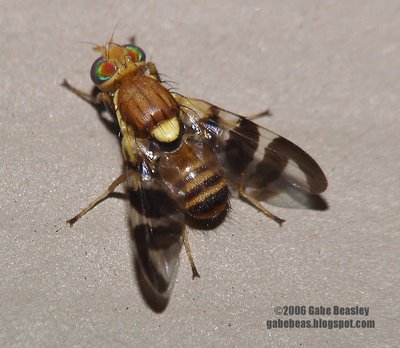

Here is another tiny insect for my digital insect collection. In this case a strangely colored fly. It is only about 6-8mm. Having over a foot of distance between you and the subject is a serious advantage I thought I could only get on film before I built my adapter for the E-500 SLR. I could have shot this fly from four feet away with the addition of another lens and tripod. It is incredible to have this much distance. I could never afford the kinds of lenses to do this on by budget. Being able to do this without 1000s and 1000s of dollars takes a lot of thinking outside the box. Don't ever take anything for granted and take good care of your gear. One splash of a sports drink could wreak vital electronics or other stuff. Even the most expensive cameras and lenses can be destroyed by being careless.

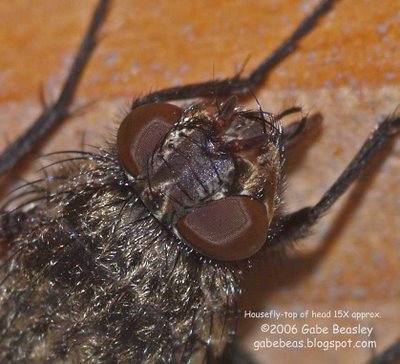
This scruffy looking housefly was just one of a few things I found today. There are the occasional beetles, but the intricate parts of a fly make for a very good test subject for my lens adapter and the lenses I use for it. It will freeze here soon. This guy looks dead, but he's not. I freed him from an old spider web. After seeing how complex flies really are, I have a new respect for them. I wish we had tons of other interesting insects here--but I take what I can get.
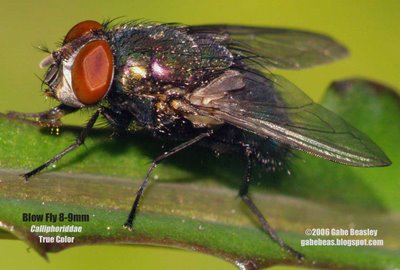

ONLY SLIGHTLY CROPPED TO SHOW DETAIL
Another shot of that fly I found. This time taken a bit closer. It was on a briar and the background is green because the light is very defused. Interestingly, at such a high macro the foliage is completely invisible and a green nearly artificial looking background is all that is left. Pushing macro shots even further is possible with a better flash or flashgun. I have the gear to capture serious depth of field I just need to get a better flash among tons of other items. Here it is feeding organ extended partly. The organ is surrounded in sensory hairs, it is called a proboscis and hangs just above the branch under the head. I can't put massive files up here--so unless you buy a CD from me this is all I can show you. I convert my pictures to JPEG for storage and backup. A tip everybody should know.

The other day I saw a Quadra 840 A/V In it’s day the most powerful consumer computer in the world. Arguably. It was about $6000 or so. I can’t remember exactly. This was in a small Mac store that no longer exists in Beaverton. I’ll never forget the girl working there trying to teach it to recognize speech. like “open folder” and stuff. I really liked it, but as usual I had to go for a laptop and my dad sure did not have a budget for that! I saw it, and about everything you would want for it--at the local thrift store the other day for about 10 bucks. That is just creepy. This shows how much and how fast technology changes and how digital photos if they are to be preserved must be put on mediums that can be quickly adapted to future technologies. Now days I exclusively use external hard drives so that I can simply copy over to the next level of technology when it comes up. USB 2.0, 3.0 and above--and whatever comes after that there will always be a way to store and copy over. If you don't keep up however, an old CD or DVD may be unreadable just 30 years from now. A good argument for taking some pictures on film. The chemicals and gear are too simple to be lost to technological advancement.
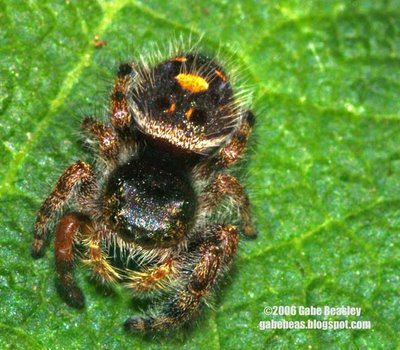

So here she is again--I can't get over that look. I think this is a lady here. As I watched her she did some tricks. Jumping spiders can be fun to play with when they watch you. If you can catch them in the moment. And you should remember, I'm operating a manual f-stop control here. It's mechanical. I could probably never use the servo power line from the camera to operate a solenoid or something to operate apertures of my non-digital Pentax lenses. I would not even try because of dangers to the camera. So I have to site and focus--hold it as steady as possible--clamp down into a dark view and shoot half blind. It works. I am actually taking less pictures now because that distance between me and the subject gives me time, they don't run or respond fast and I don't have to torture myself sneaking up on something as often. Just like an old manual camera--and it works fine. With a distance that works now it's well worth it. I took one of these shots standing. If I had used my old lenses this little jumper would have jumped a long ways away really fast. Another missed shot at the illusive baby jumpers. She will grow up to be very black and white. Young like this-I finally got the shot I wanted.
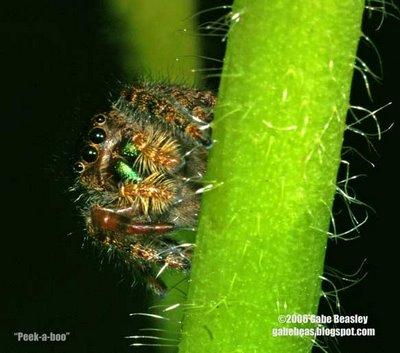

As she was leaving, interested in my camera gear--she looked back almost to say goodbye.
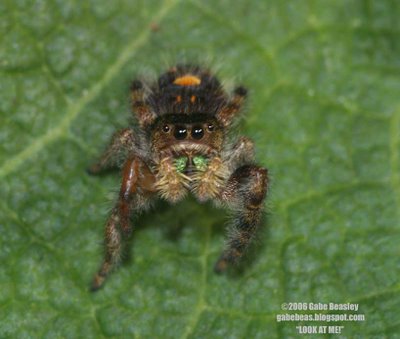
I was so far away from her in my first shot that she did not seem to notice me. When she did she looked up and here it is--I did not have time to turn the switch on to get a higher F-stop so I got this with a shallow but just by luck, good depth of field. That's it for now--there is more to come and tons of pictures to post all winter if I have the energy and time.

Wednesday, October 11, 2006

A NEW LENS ADAPTER CHANGES EVERYTHING!

An ant checking out a flower. The detail in some of these new shots from the adapter you will read about here is awesome and makes me proud because of the work I did to make it possible. Operating above f22--depth of field with very small insects and spiders is now possible.

BUY A STROBE for less then 10 bucks I bought myself a strobe flashing light as bright as a small flash unit and controllable up to very fast flashes. With it you can find details while in very high depth of field tests. It produces enough light to take a picture at f22. Unless you know how to build a battery inverter they are not very good outside but for shots inside they are a quick way to get allot of light somewhere--get one while Halloween garb is being sold with backlights. I'd recommend getting a battery powered FLORESCENT TUBE backlight if you can--they are useful if you like Scorpions. One of many subjects I have not caught here yet. They glow like radioactive paint when hit with UV light at night when they hunt. I have been told nobody knows why they glow yet.

MY GREATEST DAY IN PHOTOGRAPHY 9/27/2006--I built it! My uncle told me "it can't be done" so I did it. Thinking completely outside of the box and using some scrap materials I built a fully functional click on --simple and even marketable-solid system that converts Pentax to 4/3rds digital. I have some truly serious new lenses and optics now. I'm not going to brag here, but thanks to some luck and knowledge of mine, I invented an adapter that finally led to me being able to use in field my entire pro-macro kit. I have incredible new abilities that I am very proud of.

I thought you would want to see what most people call "beautiful" stuff before you see what my new lenses can do with what I consider to be beautiful and incredible. The fly below is far more interesting. I won't swat a fly again. The beauty is in the complexity we so often do not see. Well now with a true-pro macro kit--I can see and show you more then usual.


I call it my "digital Bug Collection". The high-res version is so good you can see fungus and other objects on it's body and count it's eye facets. I am very lucky to have acquired and then invented the adapter that changed how I take macro and micro photography forever. I can use this gear which can get even closer then above, on any subject. This fly is NOT POSED and I do not bereave in doing that. Especially if you kill the insect. This is a live shot taken in my back yard at a very high depth of field so you can't see anything else. If you ask me bragging, its bad luck. The only thing I will say is that shots like this become easier when you can shoot from a distance. I don't want to brag so I won't rattle of specs or how good or whatever this system is. If you want to know I can tell you in an e-mail a bit more. The point here is not the gear--just look at this. The beauty is in the complexity we so often do not Notice (or can't). Well now--after seeing this creation--think about this before you swat another fly.


A HONEY BEE and it's about 1/2 or a bit more sized "bully bee" competitor for nectar and pollen. Sometimes "bully bees"--as I Have named them are placid and sit together sipping nectar or nesting on one flower (see a couple months back with "all pictures")

With 3mp camera and a lens add-ons. I have made very nice close-ups that are high-detail insect and spider pictures. And good lenses common now to 4 to 6mp+ digital SLRs and more cameras with high powered close-ups and cropping ability just gets more cool--the days of killing masses of insects and trying to mount bug collections will hopefully slowly become less and less needed and done. I have made some really nice collections in my day--but in the end--when you move, or something happens--or you forget to change the mothballs--or whatever--they will fall apart. They do.

Spiders loose there color and usefulness in alcohol and I will never forget when my whole collection jar dumped open in my carry-on bag once onto the floor of the airplane! All the spiders and all the gauze and glass and crap in a pool with my field guides and notes. The days of that stuff should be over--and at least for me with high-res digital cameras at 35mm or 120 (studio-style- medium format) equiv. and higher the days of rotten empty skeletons and carcasses of messy bug collections are over. I used to be proud of my collections but I only have one small part of them left. Even in museums I have seen quite a bit of very visible insect parts and damage. When a new species has been discovered yes, you do need a specimen so don't get me wrong about the science end. I am just say thing EVERYONE does not need one! I am just hope that it catches on more and more that we do not need to have insect collections made by everybody that you know will be destroyed eventually no matter how pro you get it. Digital insect and spider collections with simple equipment can and will revolutionize this field soon as more and more people find they can study what they love without having to take from there allready much too short life-spans. This is a classic case that it is possible but people will probably not do it until they want to on a wide scale. I would never have gone to school for spiders and insects because I admire them so much and do not want to kill them. Like in all animals, they should be observed in there natural environment--even if that is your backyard.

With up to 2 feet of clearence I can shoot even a very shy fly at this level of magnification. Here it landed nicely on this leaf. I spend HOURS out there, sometimes 15min just sitting--looking for something to move. NONE of my shots are done like some people do-they are not cold-posed or worse--glued onto surfaces dead. This is a live fly that is probably still alive now. Did you know that we share more then one 1/2--ONE HALF of our DNA with FLIES.

At full-res this picture has truly incredible dimensions. I no longer need add-on lenses and my optics are far higher--most of all I am able to shoot from a great distance and even with a moderately powerful flash make a tiny 8mm fly shot have incredible detail. To make it possible for the Internet I have to make these files very small and cut down--if you want to see the full version of my digital Bug collection--you gotta e-mail me. I am thinking of joining a system that will make sales possible without word of mouth alone. My whole mission--or whatever you might call it--is to show people that making a Digital BUG COLLECTION is very possible and even more worthy. We can take the killing out of most work and be able to do what we love to do thanks to digital photography.

A fly chewing bubble gum? I am not sure what this is. Where it was found suggests that it may have stolen this liquid from local aphids, however I have never seen that happen. This fly was so
small it took me over a half hour to get one good shot of one of them. It is a typical small domestic house fly.


Another shot. More observation has has me thinking that it did get this fluid from local aphids as do the ants. It may milk them but most likely steals it when ants are trying. The files and aphids on the same dieing weed--it's the only thing that makes sense.


This is a house fly, one of my first fly pictures with my new gear. It is only about 3mm long-at most four with the wings. I can shot this at over a foot away which makes it far more possible to shoot insects with the pro-kit. However--it's allot of heavy gear and you have to get used to holding about 5 pounds of camera or so! Just wait--the new stuff is starting to trickle in as a process files.


This is a hover fly. I no longer need to get that close to my subjects, since my invention and macro kit that works because of it, I can get many types of views with the same lens.

No lens changes here--just an adjustment and I'm in bellows rail. These lenses are mechanical and outside my regular-looking digital SLR and they clicks in the same way--but I need to adjust some of the heavy components by hand. It's easy and gives a sense of old-school control lost in today's digital controlled world.

The power of my new lens system can be seen when you look at this image in full resolution. Some of these pictures you can blow up and some you can't. Lets just say the originals full size ones are nice.


A new look at an old friend. This is a species of bee I've been photographing for years now. But never this small. No big crops here. This thing could be 30x40' easy. These lenses can get even closer then this.


Feeding and collecting pollen, this image was taken from almost 2 feet away. This bee left just as I got a lock on her--caught in the moment due to a high powered flash and high shutter speed.

A jumping spider, this time--not out of focus and not too far away. I tried to get her to look at me but I did not want to loose the shot. This time the picture is much more clear for these tiny spiders. I love it.

This is where the SACK SPIDER is in it's natural habitat. A bit transparent and reflective in
ways that make it blend in without needing to change colors like crab spiders do. The sack and hear nearly invisible in a yellow overload of light.

MORE About these shots--these are the first pictures taken by me with the use of a new adapter that I honestly and literally invented and built for macro pictures. An adapter for my Pentax Macro gear so that it adds some ratio perspective and lets me use screw-on lenses as macro lenses and a true macro-kit I have. What I plan to do with it I don't totally know--right now--just make the best pictures I can and experiment with more lenses and setups. I am very proud of my ability to build this. Which far exceeds what I knew was becoming a "dead end" system of using end-of-lens add ons over and over. You just can't add more lenses or you lose all depth of field that way. The pictures above are only the beginning to what is the biggest breakthrough I have made in my photography experience since I built my first old-style camera lens extension setup on a 35mm film SLR. Since I learned I could build extensions out of relatively often simple stuff. God and life has dealt me a good hand here. I am very blessed to have these new abilities and I and can't wait to show you more pictures.