Tuesday, June 06, 2006

Mombo, a true and loyal best friend

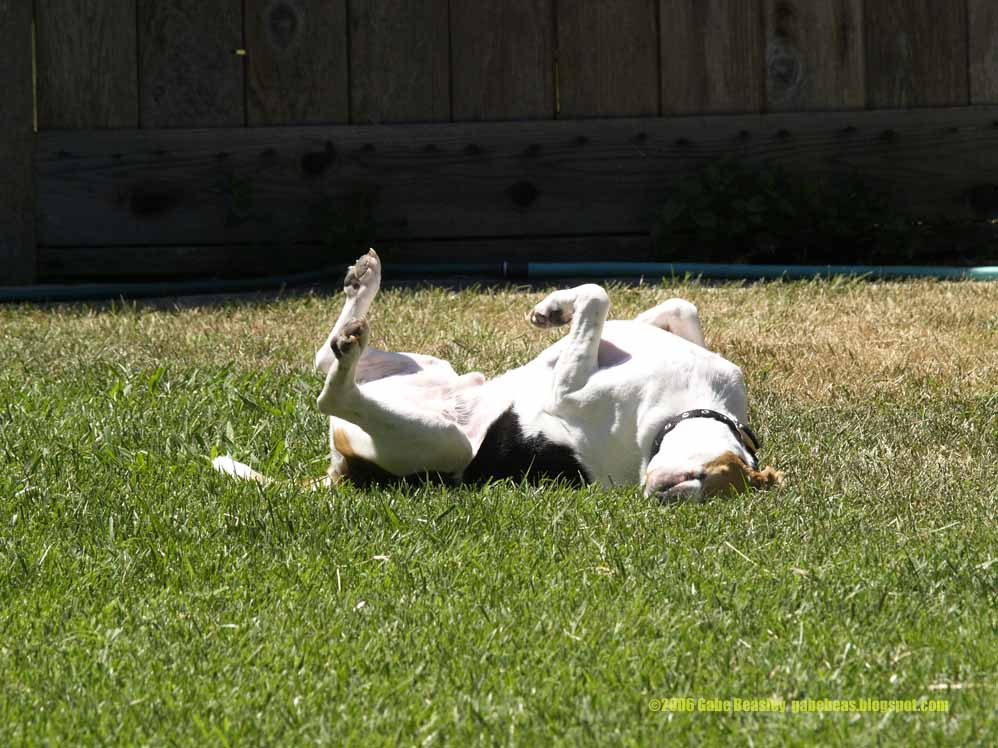
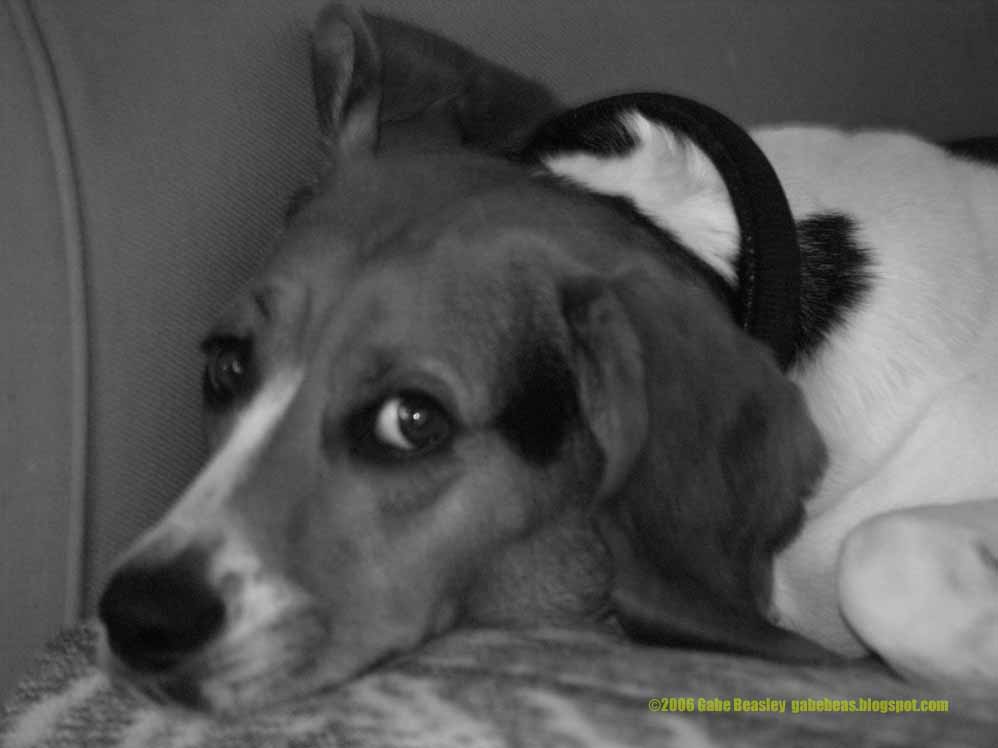
My dad's dog, Mambo. He's the gentlest of dogs and very nice. He has two things he is obsessed with, food and barking VERY loud. But we love him very much.

Have you ever wondered what your dog does while your not home?
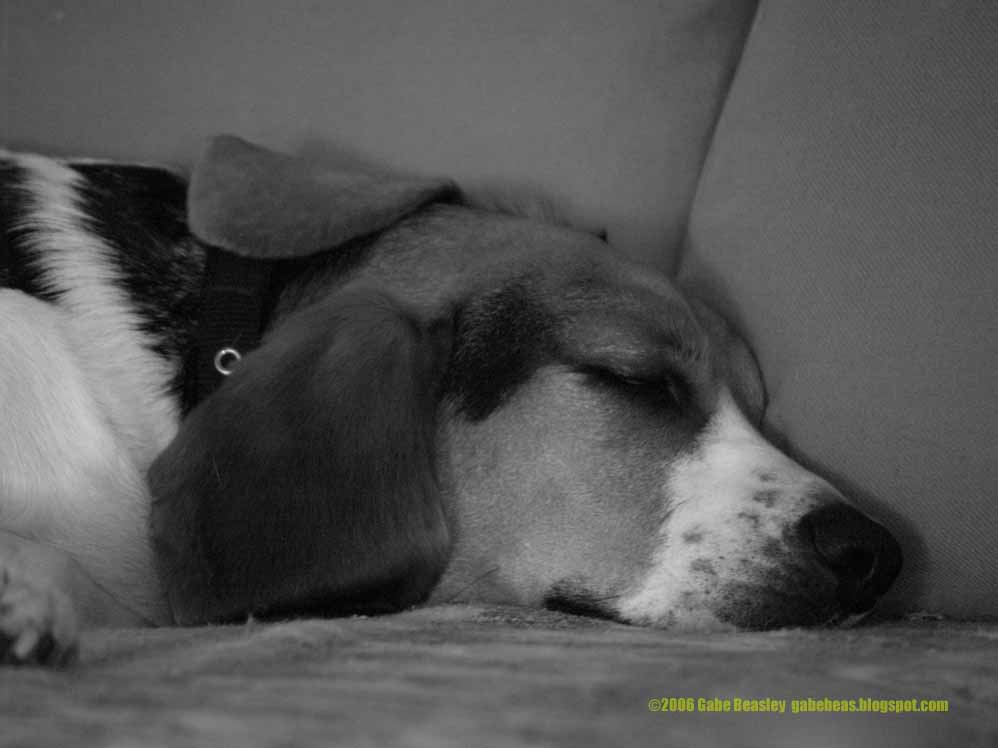
A nice nap. I noticed his paws moving as I shot this low-light image. If your in the market for a more "pro" camera like a digital SLR--be sure to get one that goes above 1200iso. You will want it. I believe all the top brands do as far as I have seen. But check on that because it's a really nice feature. I can take incredibly clean pictures at 1600iso black and white or color.


Mambo in a candid moment. Using no flash inside I built a set of all the controls I can just push a button on my camera to switch to the custom mode. White balance, ISO, flash control, f-stop, shutter speed, color mode and other features pre-programmed lets me have all those complex settings and changes with the touch of one button-I release the button and it returns to my manual settings or auto-modes. I often manual focus and nearly always operate at shutter priority mode or completely manually. This keeps me trained in memory about my settings so that I can know what I need to set some of my film cameras at and keep my mind "in shape" as a photographer.


He also loves to catch old tennis balls. Dad walks him every day to a local school and I shot have many more shots to post.


I had a great chance to practice at portrait and low light pictures of living creatures. Any practice and learning is always good.

Sunday, June 04, 2006

MUCH MORE TO COME & GREAT TRAIN TRIP

The very historic old train station in San Jose. Most train stations have musium items from the railroading past as well as well kept very nice stations like this one and Union station in Portland Oregon. Many of the artifacts and pictures from the old stations are very neat to see and on display. Every stop has it's own old station but be sure not to leave the train out of your site---they will leave without you if your dumb enough to not listen to the PA or nobo. They do not come backwards for a pickup once they start moving.

AMTRAK HAS MY VOTE!
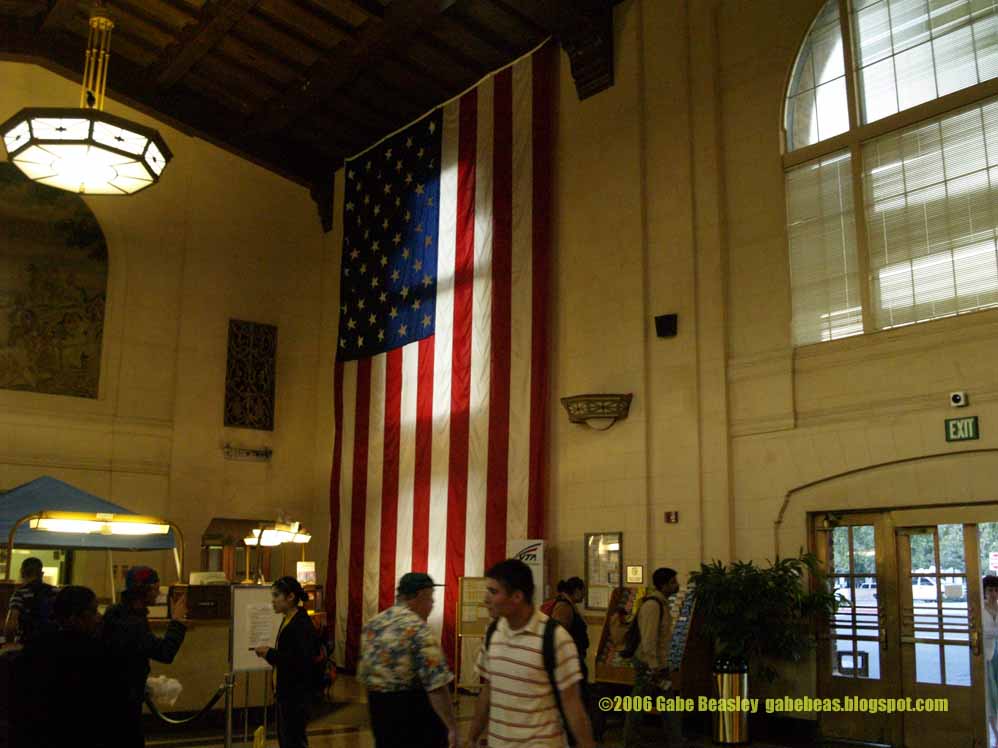
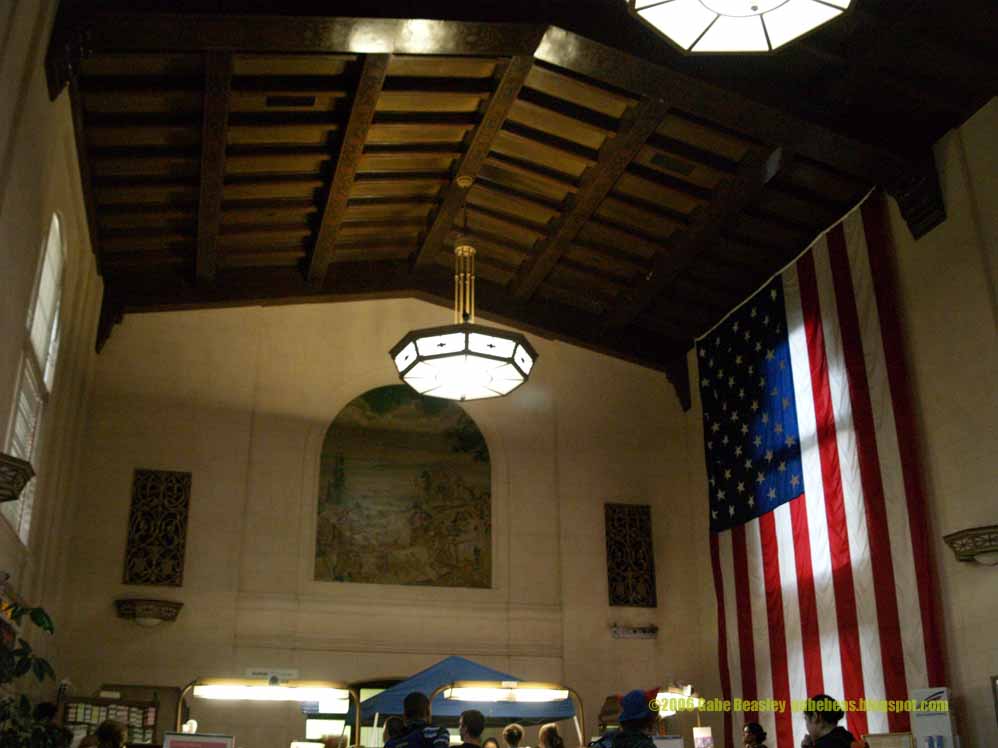
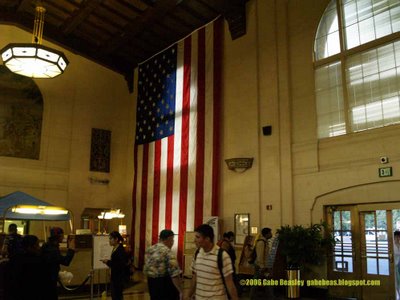
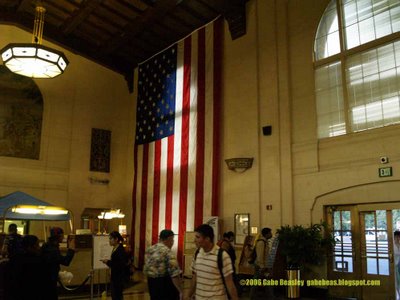
This is the San Jose train station. It is a really neat old station that is well kept. It is much like the far larger Union Station in Portland. Not just the views from the train are interesting. The station, the history, a few museum displays, and old pictures as well as artwork in these many old stations is very interesting. These shots were in very low light. I shot them at 1600iso at about f8.0 with a shutter speed of 25 on my digital SLR. (I can go down to below f4 but I forgot to bais the shutter priority mode for higher gains.
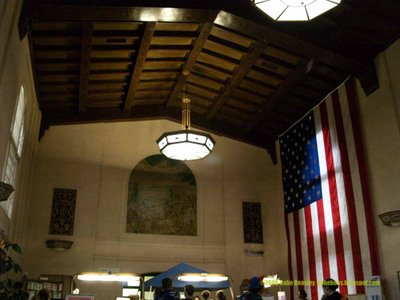


Look at the size of that flag! The historic stations are interesting and there are designated breaks for smokers or photographers every few stops.

While waiting for the train to arrive and while on the train--opportunities can happen! You can meet allot of people on the way who often like to chat.

Due to the large amount of gear I carry with me on trips and my wish for awesome scenery shots, I take the train when I need to go somewhere. NO LONG SECURITY LINES or taking off your belt, boots and waiting for hours dealing with power-tripping security agents. NO COMPLETELY OPENING AND REPACKING YOUR LUGGAGE and showing them every lens and part down to the detail. And often you are nearly guaranteed 2 big seats to sleep in once other‘s have moved around a bit to sleep in. At 6ft 2 myself, I can sleep if I want to. You can always move to the lounge car so you never have to sit next to someone you don't want to--it beats flying and the bus these days by far. It is a nice environment to chat with new people--conversation is easy to find. Or you can enjoy the schenery and take pictures which will come out far better then you might expect.


DELAYS---YES, there are sometimes HUGE delays. You can nearly bet that the train either way will run four hours late. I won't lie to you! This however is an adventure as we travel through some of the most beautiful scenery in the Northwest at a steady pace of 30 to 90 miles an hour. The sometimes very long and un-predictable delays are due to the crowded rail lines. Every trip is more then an adventure. I can't stand Greyhound buses either--so if your like scenery and are on vacation or something--TAKE AMTRAK. I promise you if you are the adventures laid back type like me you will have a great time. CELLPHONES and GPS units WORK ON AMTRAK! Put your GPS on the window. At least mine do.
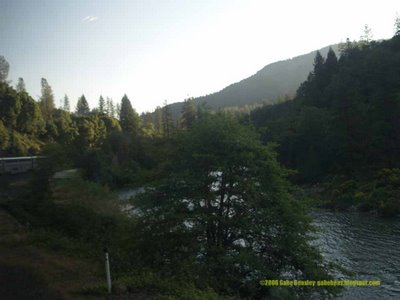

A hint for glare--use a longer lens or zoom-lens. You want to get through the stained bullet-resistant thick and sometimes glare or dusty windows by using a long focal length. A long lens. A wildlife lens or wildlife macro lens for birds would be good. But you will want to carry the old-staple 50mm (35mm equiv.) lens to get broad views as well. A long lens (200-500mm+ 35mm equiv.) will reduce glare and other issues filters can’t help with. Last resort is a sure shot--put your camera lens right up onto the window to stop glare. No matter what you do--you will get some incredible shots.
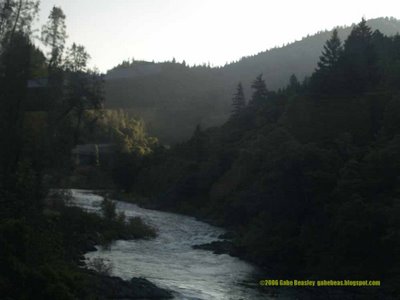

There is always an on board restaurant as well as store for snacks and other stuff. IT BEATS THE HECK OUT OF THE BUS--even if the bus is a bit faster. You can stretch your legs by walking the length of the train and often I lie down in some of the quiet places on the train at night-- right on the carpet floor and sleep laying all the way down. Disabled individuals can get an inexpensive lower level ticket which is very worth it. I don't mean to sound like an advertisement here, but despite delays and other problems people whine about--the adventure on the train and the things you see is worth any inconveniences I might have. If your in a hurry FLY DUMBBO!

I really pray Amtrak will continue to get funding needed and eventually be able to get on it’s own. I truly enjoy the train and there really is nothing like it. You see things that otherwise you will never see in a bus or a plane--you would have to charter a private one aircraft or drive back roads and hope you don't get shot for parking and taking a picture of somebody’s strange back yard!

From the strange people that live on the freight rails in big cities to beautiful scenery it’s a safe way to travel and sure to be an adventure despite delays and the bizarre problems which often happen. One time we hit a shopping cart. No damage done. Another time we had to wait for new locomotive because ours broke down--but we were let out of the train and at least to me--it was an interesting adventure. The stress of flying is far worse now days--and Amtrak has been my first choice for years.
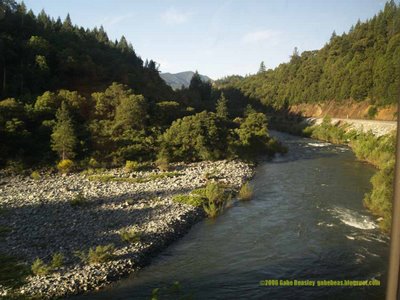

Most everyone on the train is nice and I have not had any big problems. Security is kept by the conductors who watch for theft and other issues that I have never seen happen. I have rode the train at least 50 times by now and I have not had a problem that went unsolved. It is FAR MORE CIVILIZED THEN THE BUS. Anyone who is being belligerent, loud and strange, drunk or whatever is taken OFF the train at the next possible stop no matter what--sometimes arrested on the spot. I have seen that done only twice. There is a separate car that kids can play in and watch movies--and there is a scenic car for viewing all sides.
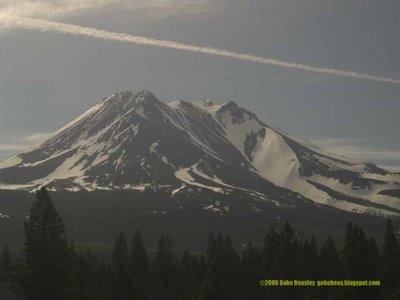
Winter to summer the changes are incredible. Despite people's frustration in this world of high-speed everything---as a laid back and adventurous amature photographer---there is no better way to go somewhere.

Winter to summer the changes are incredible. Despite people's frustration in this world of high-speed everything---as a laid back and adventurous photographer---there is no better was to somewhere. Even with a compact camera--you will get more incredible pictures then you know what to do with. NONE of these are incredible shots! They are from my snap shot folder. I will have to compile my database of shots and organize after this 30gigs of pictures trip-come back to see the real stuff. These are just snapshots--just come back and see it should be done in less then a month although at present I have allot to do involving insects.

It is everything season and I am in violation of fire-rules because I have grown my yard to attacked bugs. I will have to cut it down in less then a week so I have allot of shooting to do if I want to take advantage of this. There are no parks, or other places I have found which have environments like this anymore here. As everywhere--everything is being sprayed with weed and bug killer. The truth is no matter what brand you buy it should say "death" on the label. The stuff kills everything and does not stop killing for 100s of years. I hate it when my neighbors use it. The miss the entire point of nature and the world that lies outside of gas-powered pleasure boats, motor cycles, four wheelers, and other junk like that.

AAH!, don't get me wrong---I like all that stuff. But my medical challenges prevent me from doing most of those things safely.
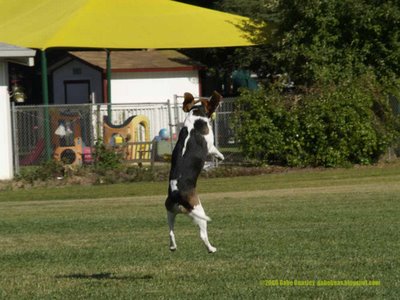

AIRBORN Pochie--Mombo jumps very high and my digital SLR shoots very well in bursts and has a tracking focus but I did not use it for these shots--I focused quickly manually. There are a few other great shots like this I will probably post. I really can't believe how high Mombo will go to grab that tennis ball with his mouth.

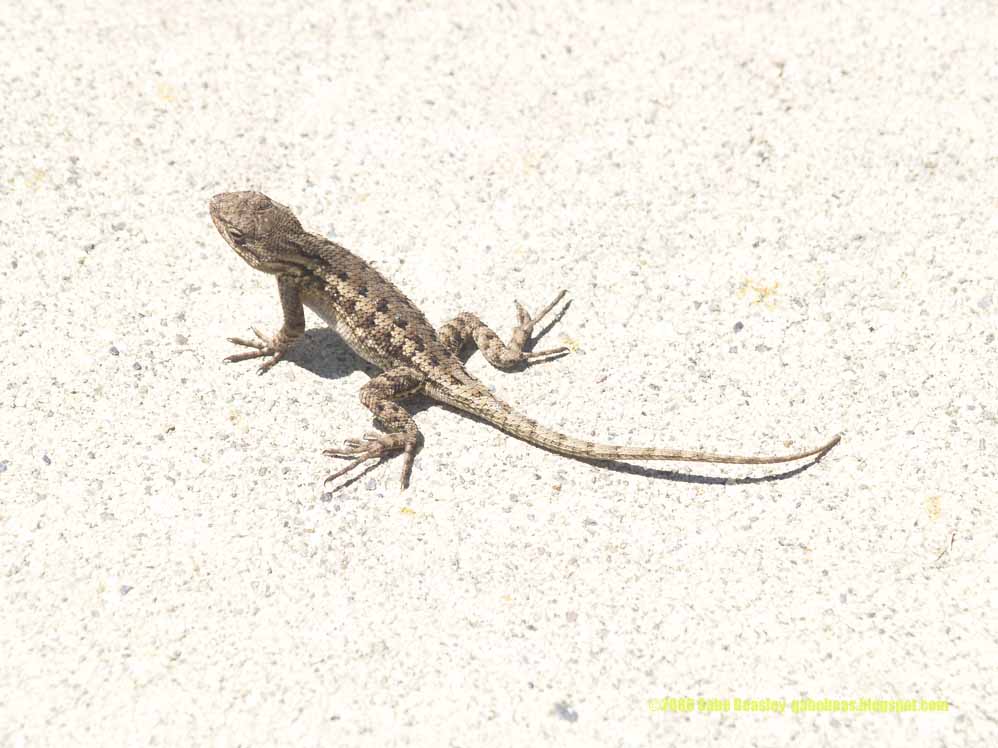
The Western Fence lizard. Very fast when hot. Your going to want a long lens to catch this guy. They are afraid of people and trying to catch them often costs them there tail. The tail will grow back and sometimes it will even be forked. I tried to catch one this time but I found quickly I'm not as quick as I was 20 years ago when all I did was catch snakes, lizards and spiders.
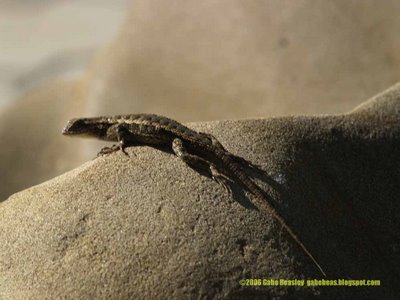
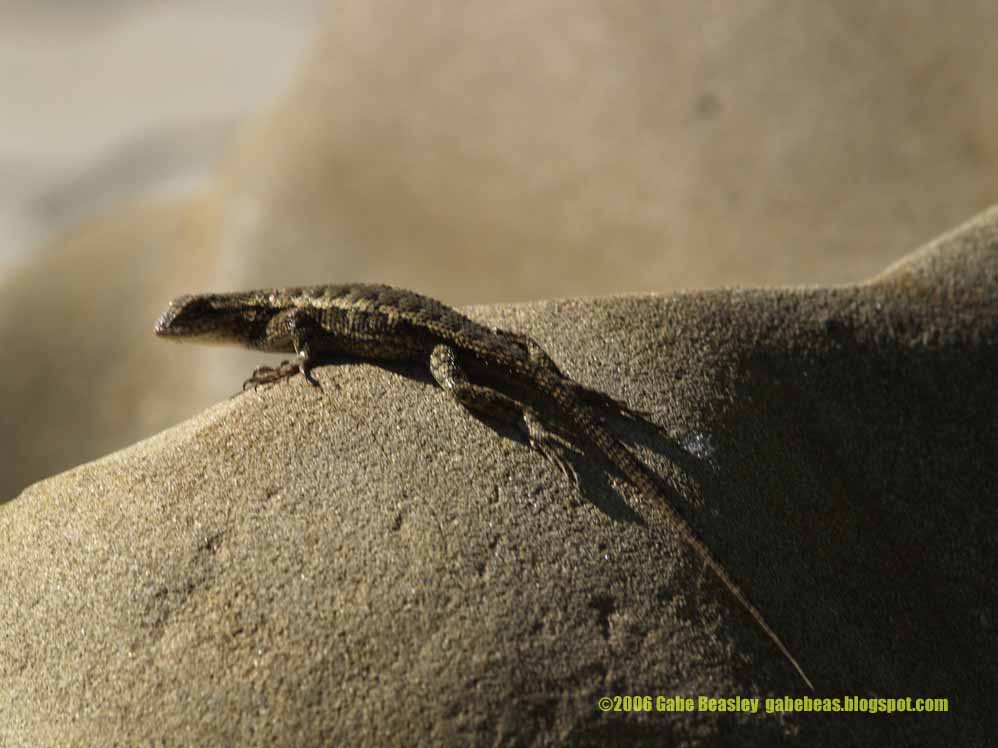
This Western Fence Lizard was hot and quick to escape from a neighbors rock garden. I snapped a few shots of it before it ran away. I got lucky as I rushed this one with my focus tracking on auto faster then I ever could change it. I give away a few tricks every now and then. Set your camera for fast action or any mode that will auto-track focus and set your shutter very high (250-500+) in order to get a clean clear shot.
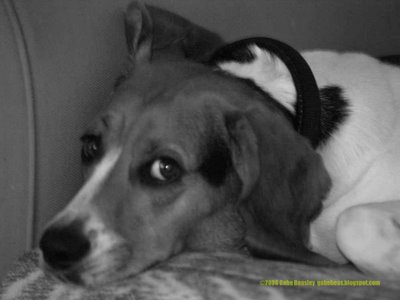
My dad's dog, Mombo--candidly awake wondering why that thing in my hands keeps clicking. This shot was taken at 1600iso with my digital SLR--special firmware settings for my camera have enabled me to control the internal flash better--I just need to find the BEST pictures-- some time that will take!
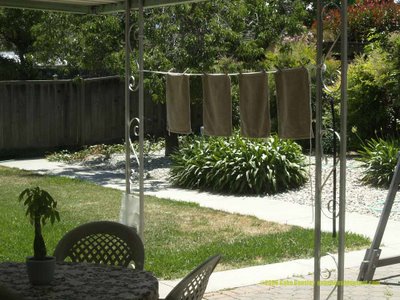
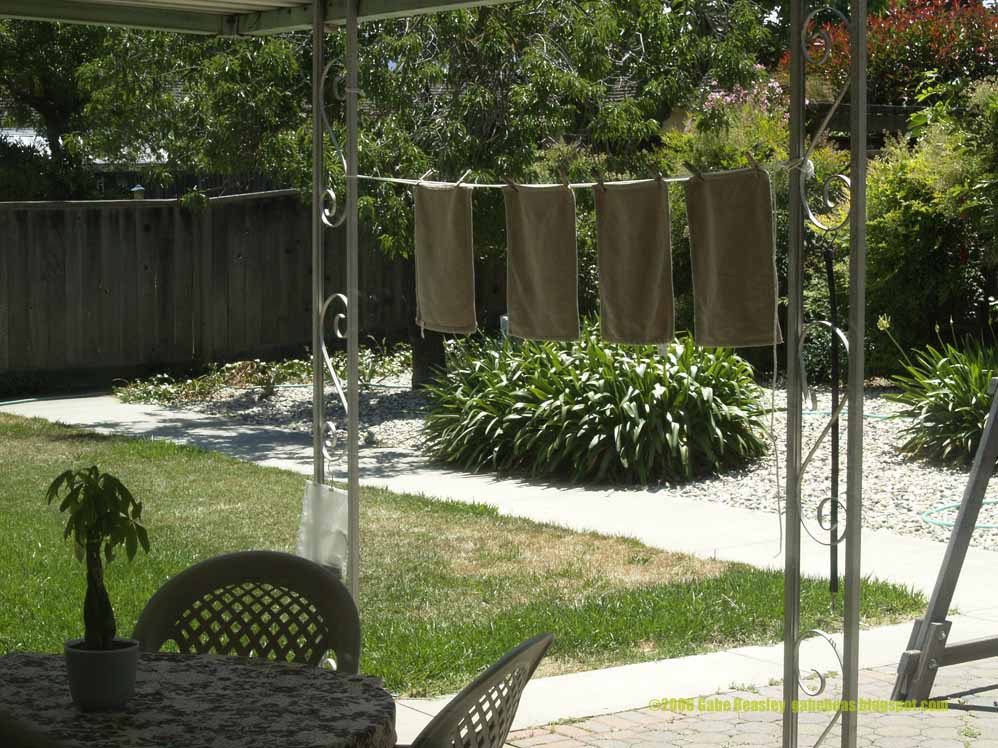
My dad's back yard. Untouched by editing--this snapshot is another one that I wanted to put up quickly. I just got in late last night. My dad and step mom’s place is really nice. I share a fascination for bonsai trees like the one on the table here. I have several better shots of it which I may post later.

THIS IS NOT THE END OF MY WEBSITE!
THERE ARE 100s MORE PICTURES TO SEE! MANY PEOPLE DON'T FIGURE THIS OUT. SEEING THE REST OF MY PICTURES HERE IS VERY SIMPLE, PLEASE READ HOW HERE!
Go to "all pictures" at the top of my website and click on each month starting with last month. Go up month by month and scroll down to the bottom until the very first month and you will have seen my entire website. I can't put 100s and 100s of pictures on one page or it would take days for even a fast computer to load my website. So I had to break it up into months. There are tons of pictures NOT ABOUT BUGS as well as articles. PLEASE DONT MISS IT--you will be glad you did not!

Friday, May 12, 2006

CLOSE UP---INSIDE THE HIVE


THE STORY OF THE HIVE
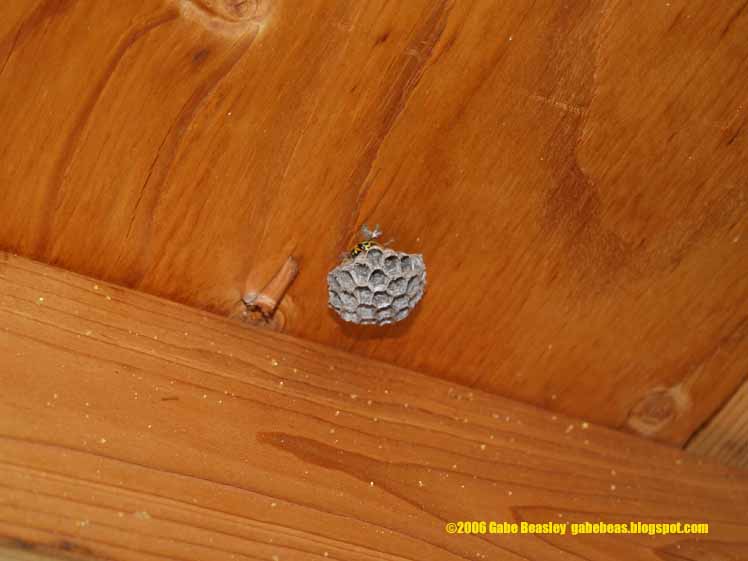
Lucky enough to survive the winter, she emerged into a cold world stacked against her, but somehow found a way to survive all on her own for now. First she has to find a spot free of wind&rain, bright sun, and animals that may disturb the nest. She got lucky and landed on a good side of a house of an amateur naturalist and not your typical local resident here. She had to grow up fast--and learned how to make paper from the instructions given to her in her by nature written in countless lines of genetic processes. Just like you cried as a newborn baby when you needed something, her instructions told her allot more! In a similar but far more complex way to do what she does. Instinct. Of course she had to know allot more then just how to get food when she grew up as a grub last year. She becomes a hard worker and truly loving mother. If she lives through the cold nights and many dangers with humans and predators--in a few weeks she will finally have a family.


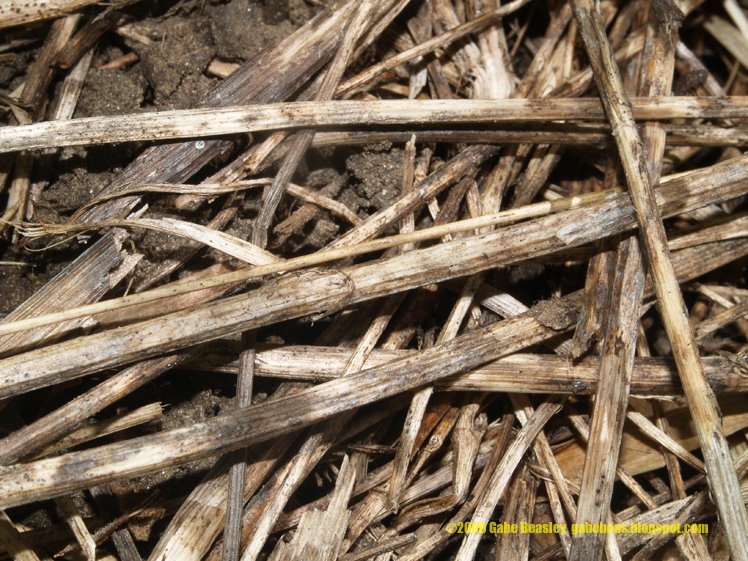
This is where she has to find building materials. I observed how they do this while in my yard photographing and watching other insects. They painstakingly come down and chew up old stuff like these weed sticks from last year. I've heard they will use many kinds of different materials to make there paper. If they were able to make it in sheets--you could make a book out of it! As can be seen from the close-up pictures it's incredibly well done. I've always been fascinated with paper making wasps and insects that can build there own homes. They mix saliva and chewed up materials like this in order to build there hive which can stand up to serious stress and weather. This picture is of the exact material I observed them using. They feed on nectar, cherries, peaches and just about anything they can find. They don't want to sting you and sometimes they will just "buzz" you or bite--they do not want to waste valuable protein on venom.
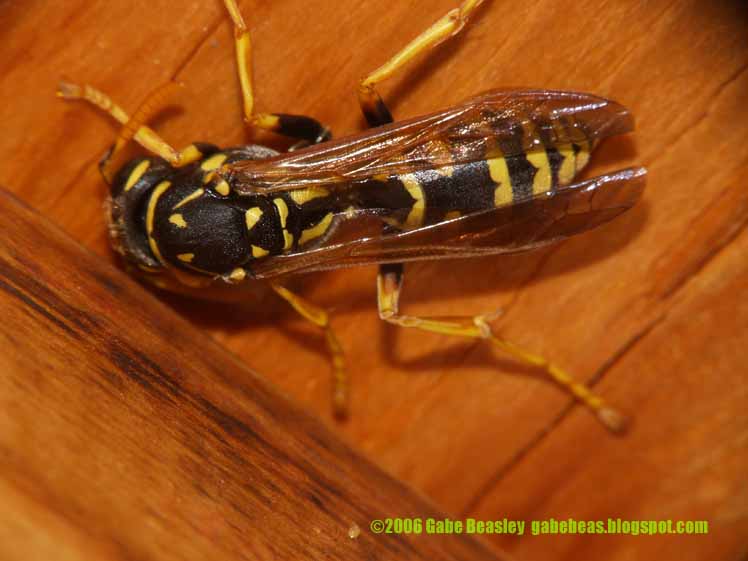
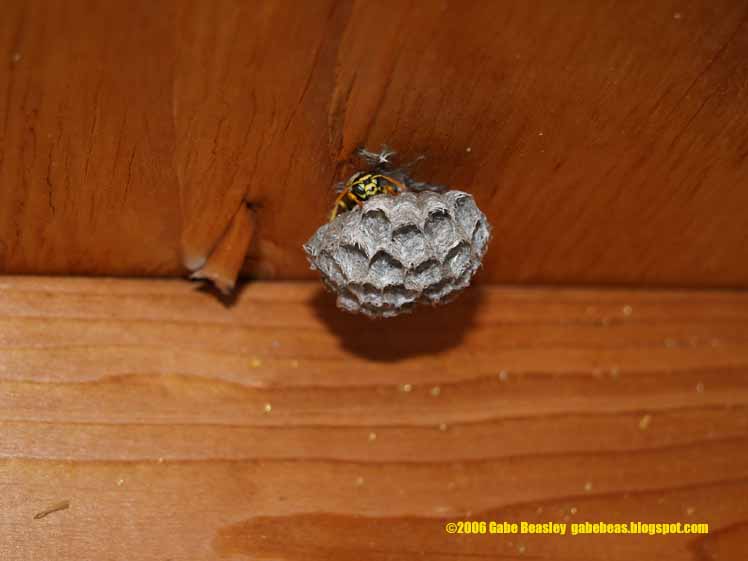
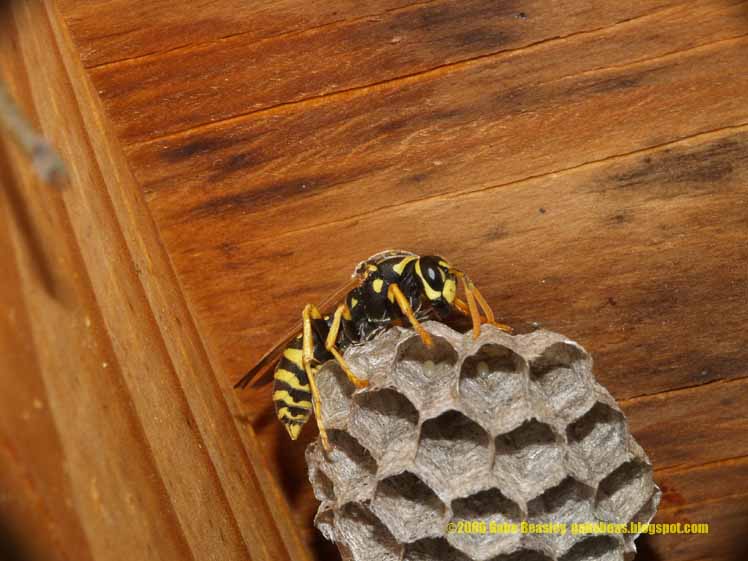
Now she sleeps so un-aware I took over 25 pictures of her and she did not even move. I had a bright light on her and fired a bright flash right at her being about six inches away with my macro lens, this one now having finally found a place to begin her home may have been flying for weeks. Soon she will be just like the one pictured BELOW tending to a nest and the eggs she will lay in it.

She has eggs already developing from weeks ago when she had to leave her first home where she was born. Then alone she has lived long enough to find the raw materials to build her home. Paper wasps and hornets amaze me. The fact that they survive with so many odds stacked against them is incredible. Since many of them don't have massive hives like bees it's a wonder they live. Millions of cans of bug sprays are sold and billions of these interesting hard working insects are simply killed at will without a second thought. It's almost sad, she is trying to build a home and a family so she finally can live no longer alone. Fighting against all those odds. I will let her live-and in future articles we will see what she does and learn first hand how the nest works. The odds are still against her. Even if the grubs survive--they cannot take care of themselves. Until there are more adults, if the mother dies---the whole nest dies. It's not uncommon to see nests this small un-occupied. Those are the ones that never made it back.


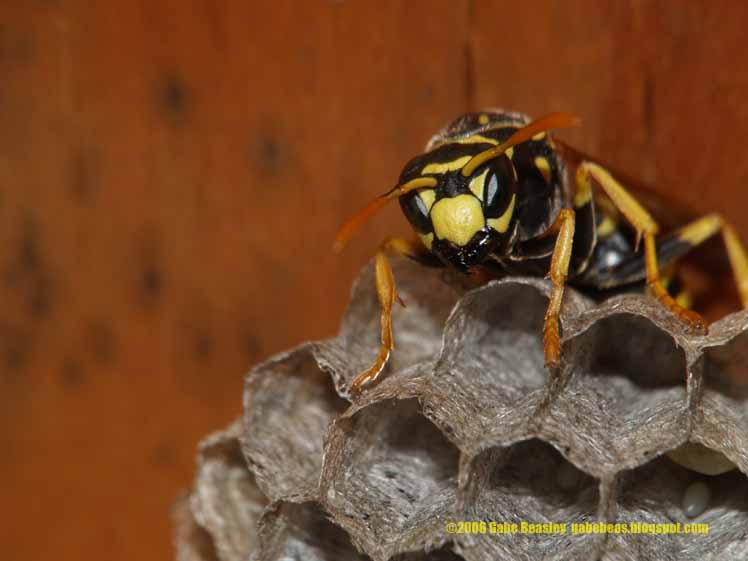
She tends to each egg in it's nice secure spot. Keeping it clean from small insects and any kind of bacteria which may grow near them. She is a kind and caring mother who will take on any and all who approach her. Yet all I did was get on a chair and hold my camera right up next to her. At six inches away she looked at me and then continued to go about her work. Clearly not as aggressive as one might think. I was careful--hornets do several body postures to look for (just like most any dangerous animals). It takes time and hands on experience to learn when spiders, insects, bees and wasps are ok to get close to. LEARN SUCH THINGS AT YOUR OWN RISK!


I was bold and careful with the lens I usually use. It gives me about 6 inches clearance even at it's tightest zoom. I did not get stung, or for that matter even buzzed--by these hornets. I was aware however and backed off several times when I noticed warning signs which make me think I'm pushing my luck. It would have been better for me to have used a bellows system and shot these in 35mm. A clearance of over a foot is a really good idea and can be done with some good macro gear. I have it but knowing I could pull these shots off with digital I chose to take the risk. I know I’m not allergic because I’ve been stung before. You never know until you are stung. Many people get stung and bitten by insects and blame it on spiders. In reality spiders bite far less people then insects. I guess that over 75% of bites people call “spider bites”--usually because they see a spider on there wall or something---are actually insect bites or skin conditions that get out of hand.


Now our Sandhills hornet has made her hive good and large--she rests and night and drinks nectar by day--getting ready to raize her family of nearly a dozen of her children. If she is killed outside of this nest---they will all die. It's up to her and she has no help from other hornets. A great deal of responsibility which will be rewarded.

NO--the daddy longlegs is not the most poisonous spider in the world. (I have no idea who made that crap up). And NO a spider with “boxing gloves” near it’s mouth does not mean that it is a brown recluse or a dangerous hobo spider. Those “boxing gloves” are found in all species of spiders--they make it very easy to tell male from female spiders. They are part of the male reproductive system of all spiders. More then %50 of "spider bites" are actually insect bites caused by the common true-bugs, ants, small bees, wasps and other species which also get into our homes and travel with us. Usually people jump "spider bite" without seeing a spider or they find one on there wall and asume it's responsible. In ALL CASES try to catch what bit you dead or alive and bring it to the hospital if you get sick--this can be very important.

HAVE A QUESTION ABOUT INSECT BITES OR STINGS?
E-mail me or leave a comment but BE SURE leave a return e-mail address!


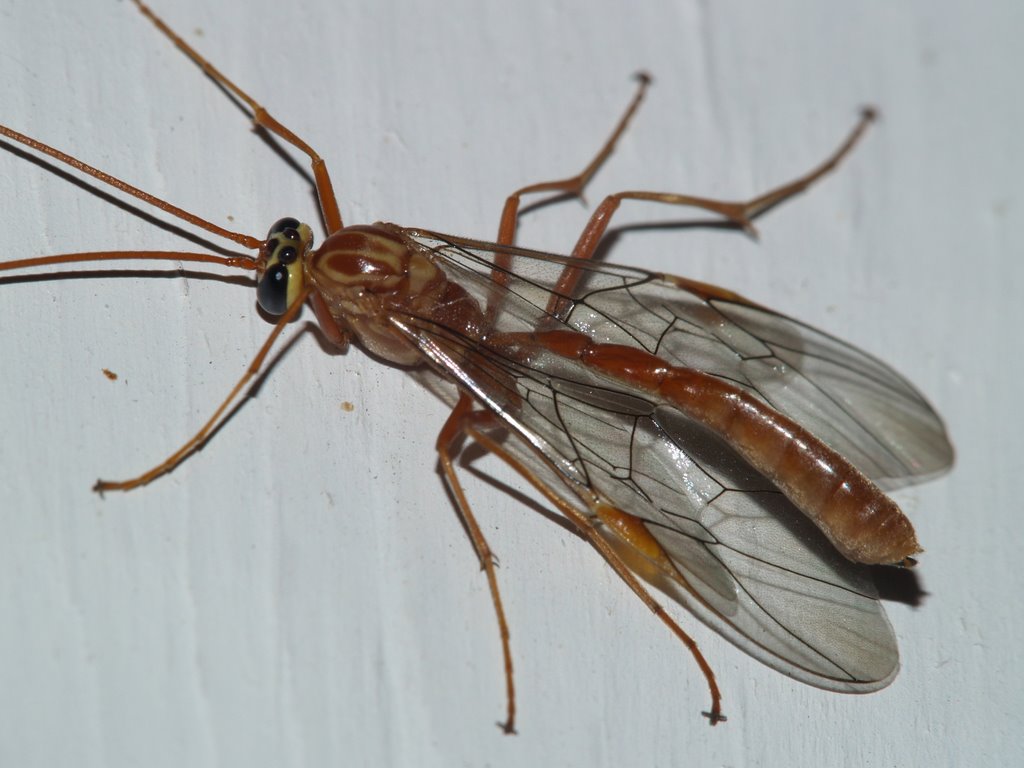
"Short-tailed" Ichneumons (p810) (ABOVE and BELOW) This is a gruesome relative of the wasp. It's odd head seems to feature noticeable extra-eyes (Below). I have a number of full body shots but they were not processed yet so I thought I'd put this one (forgive the underexposure) in showing it's strange eye-arrangement and the whole insect. Actually many insects including honey bees, ants, praying mantises, and flies have these three extra eyes but they are usually not visible to the naked human eye.

ICHNEUMONS the gruesome facts-
This wasp starts it's life as a parasite inside large caterpillars. They are very common here. The mature females will lay her eggs inside a living caterpillar--as it matures and keeps growing the tiny Ichneumon wasps grow into larva and literally eat the caterpillar alive. Pods bulge out from the brain dead caterpillar and the wasps emerge from it's body. Now that makes even my skin crawl!


(ABOVE) Finally identified, this wasp I have shown before on my site. Here is more on it. Are those eyes a means to nighttime navigation? I am not sure--but this is a nocturnal insect and the eyes seem to prove that.

This wasp is small--and NO-- it can't grow in people! It is not considered a dangerous insect but may have a mild sting (I honestly don't know). The head of this particular wasp is only about 1.5-2mm across. Some researchers use insects like these to kill pest species. I disagree with the introduction of any new species into an environment even to take care of a mistake we made--but they usually do it anyway with allot of controversy. We have messed with nature bad enough--we don't need to more. I grew up with several disasters in Hawaii caused by incompetent scientists. They introduced a wasp much like this one to control the star-spider population (and hopefully eradicate it) because of there painful bites in the coffee and sugar cane fields. Well--in no less then three years another species which had been living only in isolated areas came up out of nowhere with a similar bite and produced an even worse spider problem to which there is now no answer as this wasp they introduced only kills that one particular species. Now there are twice as many biting spiders out there last I saw--this species overlooked filled a part in the food-chain that vanished with the demise of the star-spider. Messing with nature often backfires when introducing species to islands but the use of harmful bugs by adding more of them (like lady bugs) is often a very good idea.


FLASHBACK SHOT
This probably daylight active Ichneumon wasp I managed to photograph luckily last year. I have not seen another one since then. The vacant lot where I photographed it has been destroyed for development. This one has a much longer Ovipositor. These specialized kinds of wasps can only survive parasitically. It's an evolutionary paradox kind of like the chicken and the egg. What came first? However they are as interesting as they are gruesome. Some lay there eggs in plants where they create galls on trees and plants--and far worse on caterpillars and a few other insects with very long ovipositors. These micro-syringes are sharp enough to go through an entire apple to get to a worm inside it--find the worm and inject a tiny egg. This one was also small and I was only able to get one lucky shot of it before it flew off. I have published it before but I brought it up again in order to show this article about some of the local wasps here in The Dalles Oregon.


On top of her enlarged nest, she guards it well yet as seen in above pictures seems to get very sleepy! In time more of the raw materials that are easy to find will be slowly collected by her offspring and the hive will get larger. They will view her as the queen with a powerful respectful bond who I believe gives them some small degree of orders but nothing like the complexity of honey bees. Click on picture to see the eggs in the cells.

REMOVEING DANGEROUS NESTS
The method I use is a simple garden hose with a hand-grip spray handle from a distance. Shooting them off until they can't fly and blasting the nest away. If it is broken off they will not return or re-build after a few tries. If you do use spray them with anything--even bug spray that claims to kill in seconds, they will often get the last word if you are cocky and disrespectful while doing it. Remember--insect sprays KILL EVERYTHING helpful bugs, spiders, plants, pets AND humans. Most people and kids get stung because they are either working right next to a nest and unaware of it, OR they are purposefully toying with the nest and or tormenting the dieing ones. DO NOT be stupid.


Ever ready to defend- she will stand poised to attack if I were to move my macro lens closer to her An important point here--these hornets will defend themselves. If you get too close with a camera or macro lens or your eyes, you are taking a great risk of being stung. She does NOT want to sting you. In fact this shot was taken at about six inches away from her nest. Only six inches between the end of my macro lens and the wasp. She does not want to waste valuable protein on stinging you. She is afraid for her family. What would you do if a huge animal was apparently about to run into or attack your house full of newborns?

In this view if you click on it you can clearly see the beginnings of her family. Each cell has a single egg in it. The egg will hatch and a grub will begin to grow. The mother has to hand feed each one of them until they are closed up by the mother in there transformation from a grub into a wasp. After that time they are sealed inside these cells as they develop just like a caterpillar does inside paper instead of a cocoon. It is sealed inside with no extra food or water to transform into a new adult wasp.


Even my most close up shots of her were done at about six inches away. I had to hold the camera above me--luckily my D-SLR not the heaviest in the world but since I don't have a viewfinder add-on. I was forced to focus by looking into the viewfinder at a distance and then shoot by trial and error. I spent allot of time around two nests with new mothers who had just laid un-hatched eggs--I was threatened by a dirty looks--but nothing more. When sleeping she was motionless and apparently not aware of me--I did not know that these kinds of insects could become so un-aware. I suppose she should be tired--after all, have you ever tried to build a house and raise ten kids in just a few months?


Sunday, May 07, 2006

SUPER MACROS!

Flowers AND Spiders here. (ABOVE) These probably wild desert flowers I found in a vacant lot. With a very-high macro lens I can use in the field I was able to capture this shot. To give you some idea as to how big these flowers are--from tip to tip of this shot you could cover them all with a single dime. They are some of the smallest flowers I have ever photographed. This picture is only about 10mm high. I carry a ruler but often forget to use it in field. Recently at extremely high macro I have found insects that are smaller then the human eye can see.

SPRING PHOTOS: Camera time is here--only a couple months to get the best pictures out here where I live before the heat wave of summer hits!

Recently I've been getting some cool e-mail compliments I really appreciate. Sometimes I get them from people who tell me to go to there websites or write them back. I am sorry if I have been slow at writing back. Lost information due to re-building my computer on websites and other stuff has been part of the problem, PLEASE know if you don't put a URL or E-mail address--and you just sign in as "anonymous" I can't write back or find your site. Please e-mail me rather then use comments OR be SURE to put your URL and E-mail address in it so I can write you back and find your site. I got a lot going on right now--good and bad. It's great to go take some pictures when I feel overloaded with anything in life.


New fly pictures from the "X1" contraption I built have come up. It has proven itself hearty enough to be carried in field and was able to capture stunning high-res shots of flies and other insects I could approach. Wait for the next article.


There are several tricks to doing good high macros. I say when your shooting digital--practice practice practice. If your shooting film test your settings and shoot digital first then do the film shots with the same lenses and settings.

These are all two element Diopter shots. It is very difficult to use a reversed lens system like in my "X1" camera rig in the field as you have to get very close to the subject. These high-resolution full-frame images are for sale. E-mail me for info or questions.


These two shoots took me a while to get. At macro levels this high you have a depth of field that is as thin as a few sheets from a phone book. These flies were alive and shot in my back yard! It is underexposed and I could quickly change that. Sometimes I use that to an advantage as the image may possibly be more interesting. It is hard to believe but this picture was taken in direct full sunlight outside. The reason why it is dark is the f stop settings. In order to get depth of field at these macro levels you need to be at least at f8. In this case I had to be at F20.

Here are a few hints about how this is done:
1-Stop from f8 to f22+ the higher the more depth of field
2-Select a slow ISO100-200 (I often use iso160)
3-Use a bright flash or external flash
4-PRACTICE, experiment and practice more. Keep practicing to keep your edge.
Setup a good enough macro system to shoot from 5 or six inches away.

This is a "click bug". It's not a true "bug", rather it's a beetle which I'd hoped I could get flying off. Although I'm working on the X1 reversed lens camera setup--all these pictures were taken with my digital SLR. I found ways to make better use of my lenses and practice often. This click bug is about 1cm (10mm) long. The reason why it is called a click bug is because when held you your hand they click there heads very quickly. So fast it makes a noise. They can flip themselves out of dangerous situations and then fly away. A super-huge version exists in the forests in southern Oregon but I have only seen them in collections. The ones in the tropics--are over an inch and a half long and can break your skin while clicking.

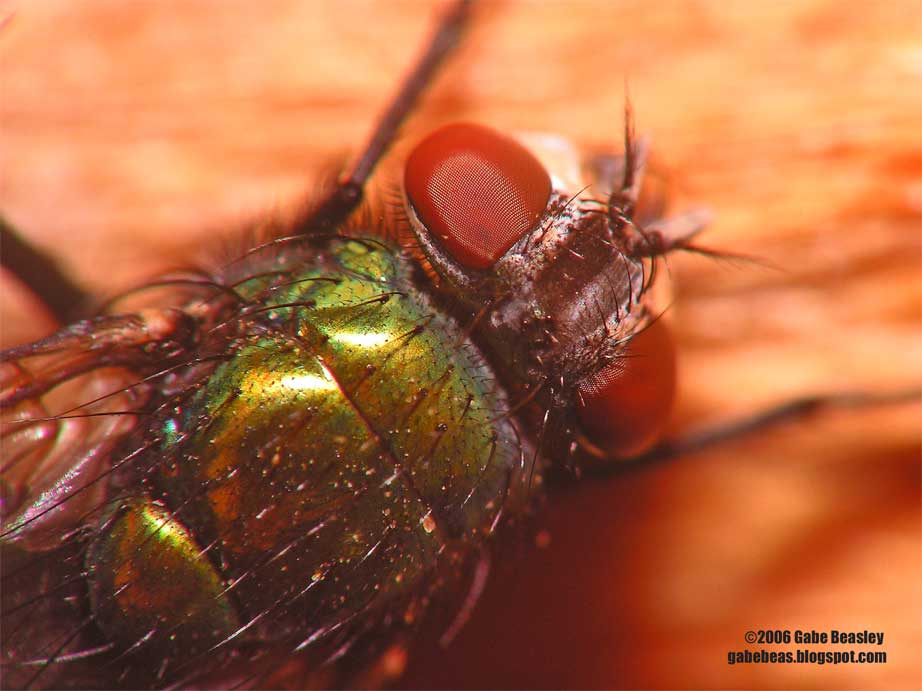
A common bottle-fly. It too landed on grass in my yard. I was able to bring it into focus and take several shots of it. CLICK ON ALL THESE FOR A CLOSER VIEW.


This fly on a blade of grass is VERY small. So ever-increasing my macro-factor my depth of field became harder and harder. Photoshop and other programs can help correct for some of the superficial problems with shooting tiny insects--but if it flies away before you get that "perfect shot"--you got to find the best one and be glad you have it. This bizarre species I have yet to identify. Notice the hairs!

Friday, April 28, 2006

I HAVE BEEN BUSY!--RECENT HIGHLIGHTS

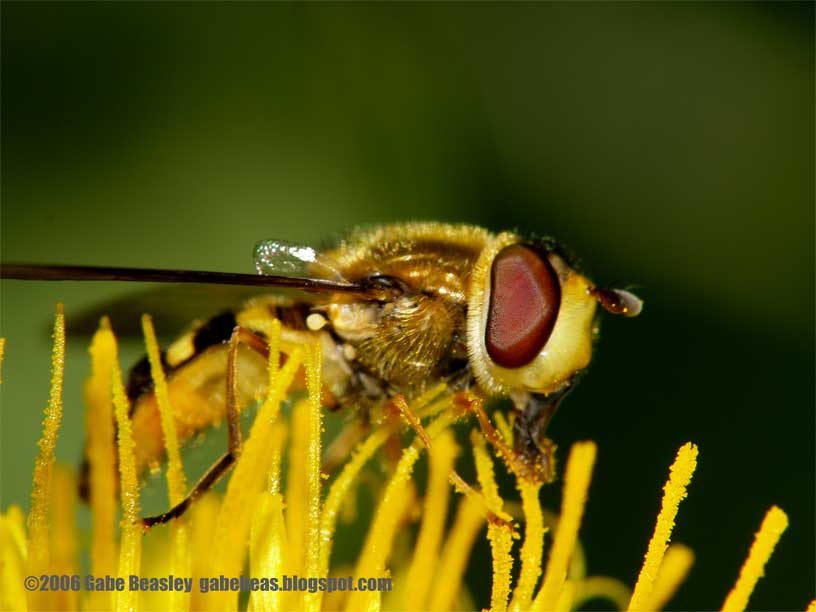
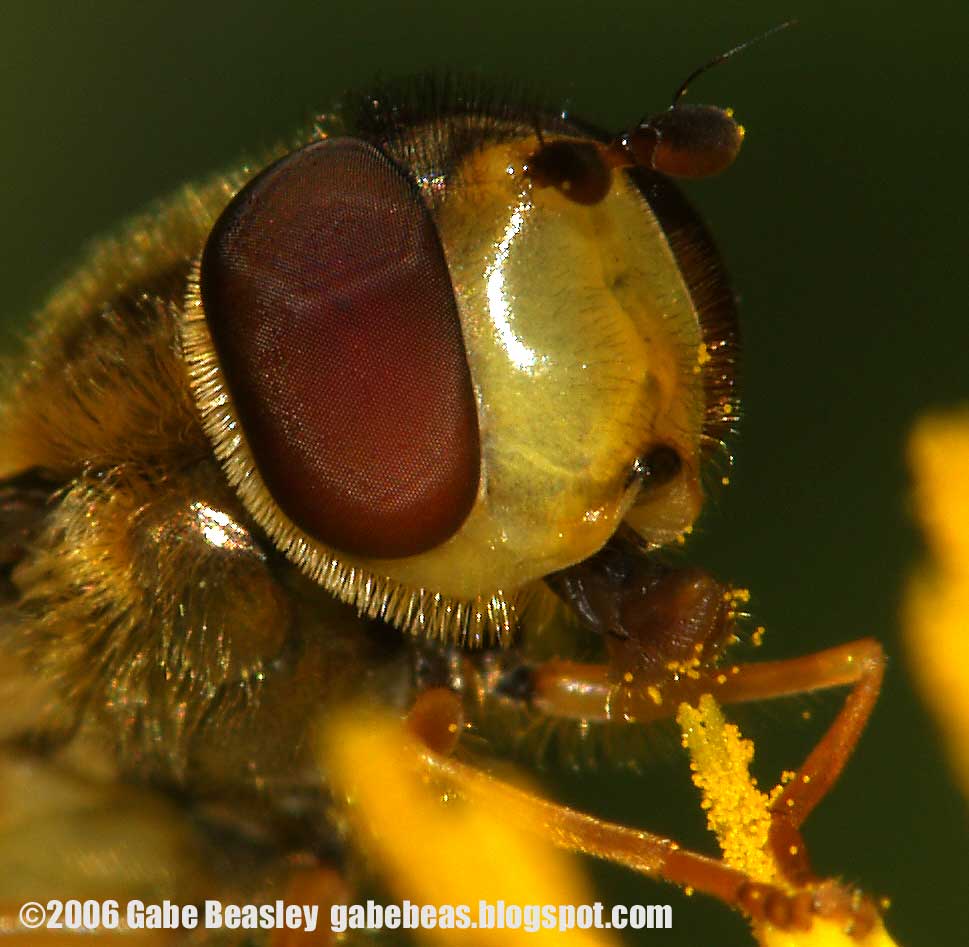
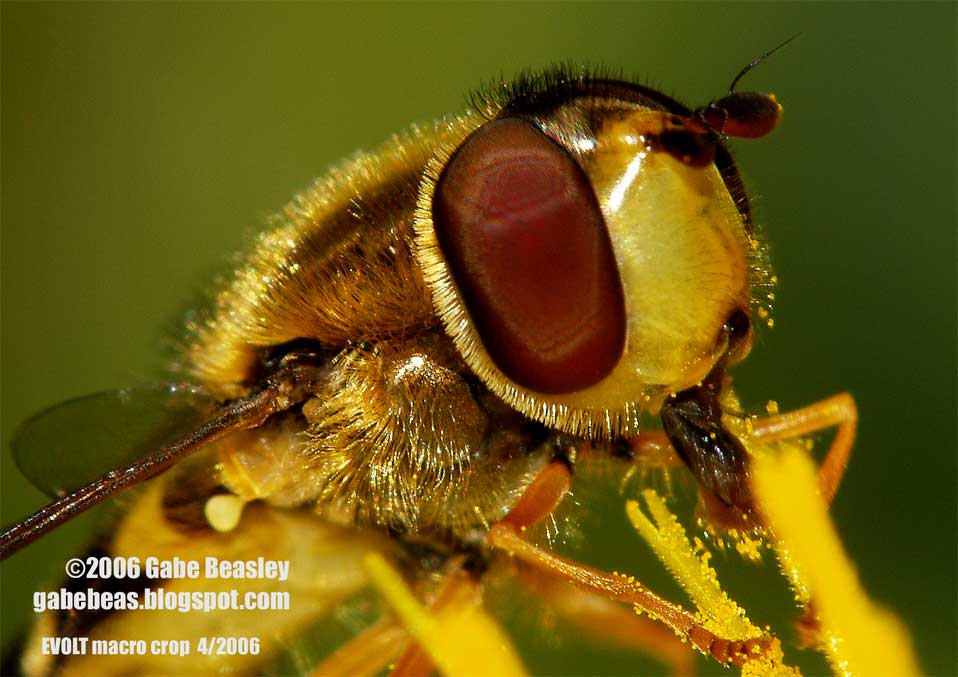
So what is it? A bee, or a fly. It's a Bee fly. A fly that looks like a bee so that it can confidently eat pollen and drink nectar without trouble. Yes crab spiders sometimes get them, as they do real bees, but the bee fly is made to look as dangerous as any bee or wasp. They have no such defenses.

BE SURE TO CLICK ON THESE PICTURES--THEN CLICK ON IT AGAIN FOR MORE!
(Use the <-back arrow in your internet explorer to get back to my site)

This is a crop of another picture, you can see it's mouthparts again covered in pollen. They do not live in hives or make honey--they simply fly from flower to flower feeding themselves as much as they can to stay alive. They may look like bees but have nothing in common with them socially.


A third shot of the bee fly. Just ahead of my depth of field (the point furthest out from the head when things get a little blurry)--you can see the secret to insect flight. That is actually an ancient wing which looks in this picture like a spot or ball on a twig. It's just below the wing and right above where I wrote my last name (Beasley). That little thing is an organ which beats up and down as the insect flies. They are very sensitive and keep a sort of time--like the sensitive gyroscopes of rockets, they keep the flies mind naturally tuned to flight. Without these two swinging organs which can be more clearly seen in crane flies (I will post a picture of one later) almost all flying insects would be grounded. They act as sensors that I can best explain are kind of like our ears balance so we can ride a bike, only much more complex and of course instinctual. This way the motions of this flies wings are changed very slightly to make all the micro-corrections needed for flight. Scientists are working hard trying desperately to duplicate this kind of flight but last I heard they are still having a hard time. It's a big like a flight computer hooked to sensors that keep many modern aircraft able to fly only based on completely different systems. All flies have them, large and small, including the one below. This kind of sensor lets hover flies stay even in the wind entirely motionless. I used to get up every morning when I was a kid and watch the hover flies in the front yard sun-themselves. They seemed so easy to grab yet every time I tried they moved just a foot or two away and then right back into hovering faster then I could extend my hand completely. I have since been fascinated with how incredible insect flight is.

This tiny fly is almost surely ready to lay eggs. It's very small, too small to notice with the naked eye unless you really look. It came to my lights a few weeks ago. It's filled on something but I am unable to find any info on this very small macro species. I could not even tell where it's head was until I shot this extreme macro shot of it with my digital SLR.

A LITTLE ABOUT MACRO CAMERAS
Another extreme Macro shot I got yesterday, this tiny baby jumper is only about 1.5mm long if that. It was too afraid for me to use my ruler. You can tell by my depth of field how small it is if you know what to look for. I was lucky to get this shot. This was done with a camera I put together I call the "X1". This macro level is too high for my macro lenses on my digital SLR. The shot had to be carefully guided because my depth of field was only about 1mm wide. These kinds of shots push the limits of macro into the microscopic level. This tiny jumper will grow to be up to 1cm if it survives--but now it's so small that even other spiders would not notice it. By chance it caught my eye when I was taking a picture of a much bigger spider below. This new setup will let me bring you even higher definition macro shots then ever before. I can't wait to get some more pictures with this new setup I put together. The images are very clear because no cropping is needed. Even with an 8 or 12mp camera--you loose mega pixels seriously when you try to get macro shots by cropping larger shots. Most importantly more mega pixels is not the way to get more macro power. It does help to have more mega pixels but the key is magnification, good optics and good lighting. That's why you should buy a macro lens or setup and you can't just shoot everything with one lens even if you can do good close-up shots. Croping degradation is very visible in any sized camera. It's often more in the optics, the lenses your using--no matter if you have a 6, 8, or 12+ mega pixel digital SLR. I find that older Nikon lenses have a higher quality factor then the new stuff. The difference can be amazing. Here in this "X1" shot--the depth of field due to optics is so much better the small compact camera's f8 limit is not really a problem. There are a number of ways to build these kinds of "poor mans macro lenses" and camera rigs--often due to optical clarity 3.2mp or 4mp is actually plenty because no cropping or digital zooming is used. Digital zooming very quickly degrades the image so I rarely use it with my compacts and on the "X1" setup it's turned off.


A black and white jumper and fully grown. There were two of them in what is like a condo for jumpers. This one is a different species then the baby one in the other picture above. I am surprised at how many were there as jumpers are somewhat territorial. The other one might have been a female. Only this one was brave enough to let me take it's picture. I got about ten shots before it finally crawled into this "cave" of paint until I could not see it anymore.

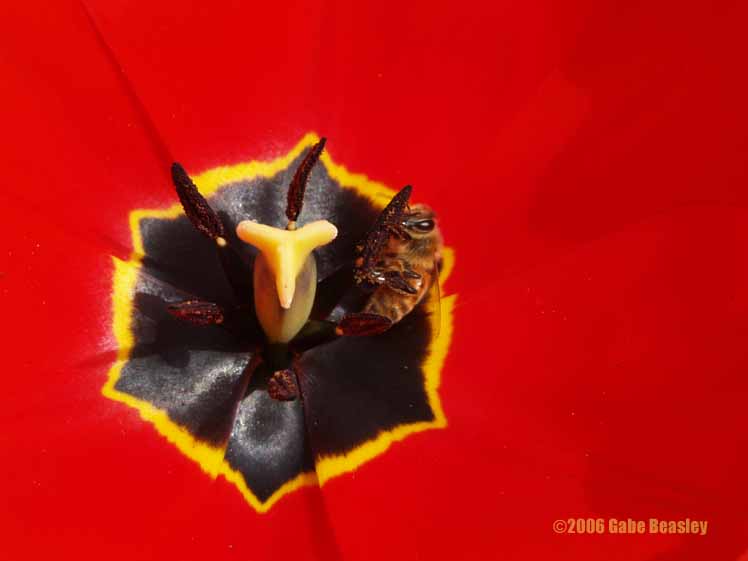
It took me allot of waiting and good luck to catch honey bees in tulips. They apparently have little to offer the bees, so they don't visit them as much as the smaller flowers that are visited all the time. I got lucky enough to get about a half dozen shots in all. The new shots taken with my "X1" setup are not even on my computer yet. I have new macro power and more is coming. And the "X1" rig uses no duct tape! Or any other tape for that matter. A solid system that looks home-made but really works.

NOTE: I have been doing ALLOT of posts. That means in order to see this month's pictures you will quickly have to go under "all pictures" and go back. Be sure to check a month back if you want to make sure you see everything. I got busy again and am posting more--summer is here and I have my digital SLR. I have plans to buy another possibly better macro lens soon.

Thursday, April 27, 2006

LEARNING MORE---PHOTOGRAPHY IS LEARNING

(above and below)
THESE TWO FLY SHOTS are the same picture processed slightly differently. I wanted a reference for myself to see as well as anyone else. These shots where done with a reversed old but nice 50mm Pentax lens. Of course it works well on my Pentax, but reversed and added to my Z10 camera. I bought the Z10 because it has all-internal large and good optics)--and it has many SLR-style menu-features including ISO down to 64, histograms, and and up to ISO400 with an incredible lack of noise not seen in any compact I've ever used! (When the noise filter option is turned on) a huge menu of options concerting files-flash and button controls to make it easy to use and extremely versatile. With an all optical 290 zoom tile-photo built in (equil-35mm).

The plans for exactly how the rig works I won't publish. I'm tired of writing long and complicated descriptions about things that people probably never read.

TO SEE SUBTLE DIFFERENCES IN THESE TWO PICTURES-CLICK ON THEM!

Once again--these are the first crude shots done with the system I'm talking about. Very painful shots before I had the mechanics that make the camera a whole camera working--in fact I was holding the heavy contraption together over my head-ouch! That old lens made for a higher depth of field then most of my other lenses. It happens to be the right size to fit onto the compact which is now fitted onto a mount so the unit is a solid re-built camera I call the X1--(what else would you name a half home-made cool close up only camera).


This bumble bee was stuck because of the windy cool day, or it had been bit by a spider? Unable to fly--I got this picture and a few other ones. This picture reminded me of some lessons I learned or re-learned when I took it yesterday. Take natural shots-don't try to pose bugs too much, and when you are at it--make sure you got your white balance right! You might notice a problem with this shot. When you are using a digital SLR or an advanced compact with manual functions like white balance, be sure to get your white balance correctly and or shoot in RAW so that you can change it later. With my digital SLR I can change it in-camera before I even get to my computer. After about an hour, I gave up thinking I could really fix my white balance later in Photoshop. I shot this bee in a very large JPEG file to save more space then RAW--but in so doing I sacrificed my ability to truly change the white balance. Check your settings! There are only limited ways to really fix white balance problems in JPEG files. This picture may look really cropped but it's not. The full version is great as I shoot for new depths of field in macro photography. Be sure to shoot in RAW whenever you can so that you are able to post shoot adjust your white balance. White balance is basically the 'color map' of the photo. It is more or less the scope of how colors get recorded in a digital image. It acts like a hue or color control but really it's a control to balance the kind of light that hits the sensor and how that effects the image and it's colors. It is measured in Kelvins. Most pictures are taken from about 2500k to 10000k. Things light florescent lights can seriously effect white balance in a shot because they make pulsed light. Color diffusion from clouds and other factors can also cause changes in white balance. It is important to understand and know how this works to take color-accurate shots. Shooting RAW is the best way since you can change your white balance settings completely even after the shot was taken almost as if you are taking the shot all over again.


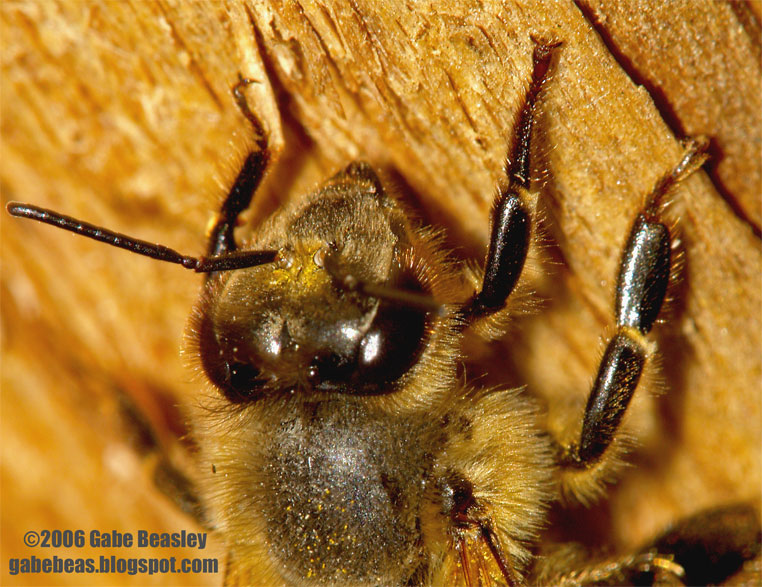
This shot is of another stranded bee. I'm guessing it is our spring patterns here. Freezing at night--yesterday it was at least in the 80s. The day before it was in the 60s. Insects can often get stranded and killed by these factors. Like flowers that bloom to early--they die and loose out. This bee was on the edge of a local high wooden fence and I was able to get very close to it easy. Too bad I had not built the "X1" yet. Next time I will be ready for that super-macro!

As I shot some local flowers I was waiting for the moment that I could capture a busy bee. In this case--I just had enough settings to get a partial stop action looking shot of this honey bee at work. I was lucky--it takes hours to get these pictures because you have to keep trying and trying. Small things can move a lot faster and even with a very good AF system that will track for you--your are likely to take at least 20+ shots per shot worth keeping. Except those few really lucky shots!