Wednesday, March 01, 2006

WEBS OF LIFE

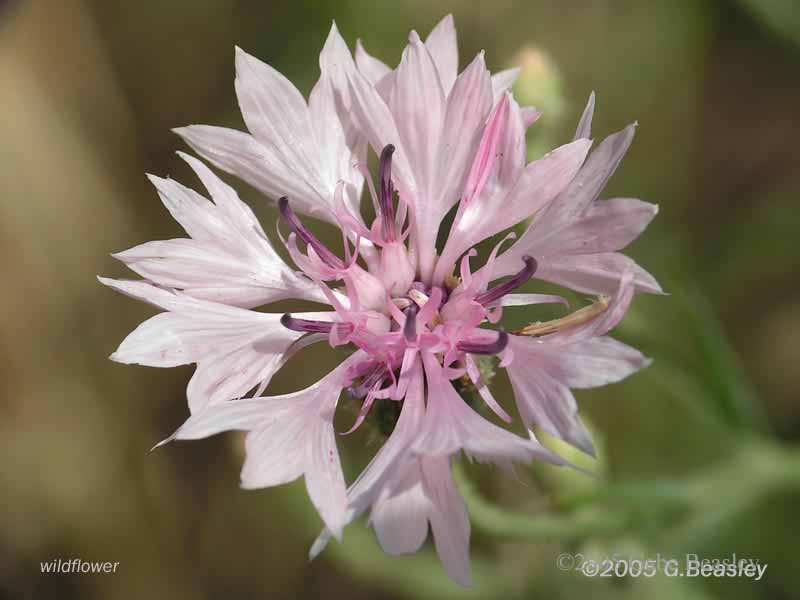
It's not just about spiders and bugs. It really never was. My new website name is in Effect entirely now so go here it is--My Interesting Images Above is a wildflower which grows around here on the tops of ridges and other places. It took a good macro lens to get this shot. Many of the wildflowers here are very small. It's been so cold here that I'm using older pictures--this one was taken a while ago. Today is the first sunny day--it's time to take some more pictures? It's going to take a while before things start to come alive after this late winter deepfreeze. Many of the things I like or want to photograph are still hiding.
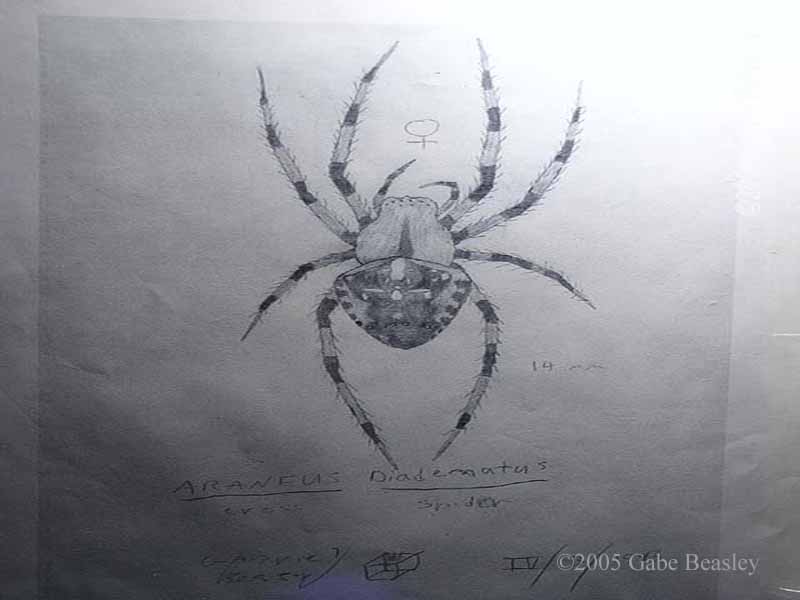
It started when I despite wanted to take pictures of the things I loved. Spiders and soon--other things in photography. The idea of capturing a moment in time true to the world rather then drawing it which can leave out details really attracted me to photography. I used my dad's hand lens, then a bunch of old microscope lenses to build a cardboard tube lens which through hours of experiments and tons of expensive film I got the thing to work. Finally--I could take pictures to
describe spiders--and not draw them. I then went to a photo-shop where I found at that time a very good film SLR (digital did not exist then) and asked my dad to help me get it. For the lenses and the camera it was at least 500-800 dollars.
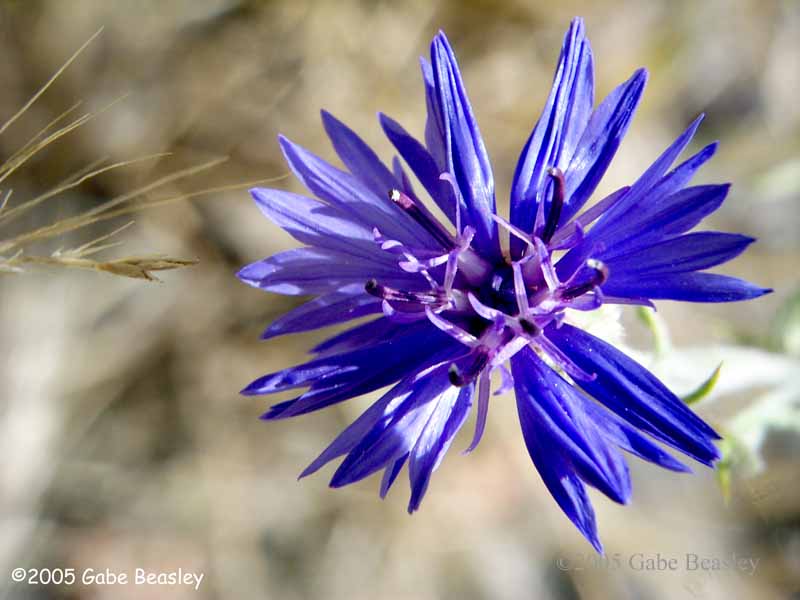


Another wild flower out here taken on the same trip. It was about a year ago if
I recall.

One from my trip to Australia. I carried my binder everywhere and fine tipped pencils- drawing the spiders and then writing down basic information about them and where I found them.
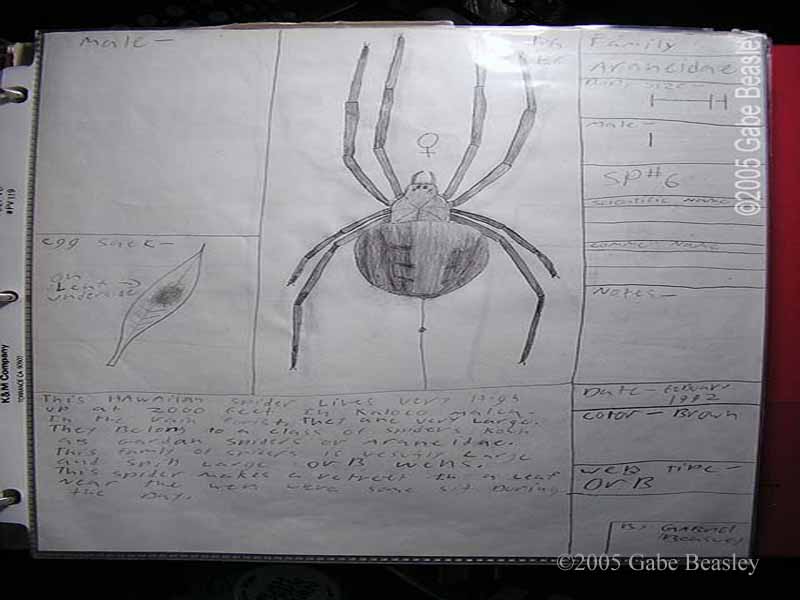
Before I found photographic description abilities--when I was a kid--totally out side of school (my teachers did not even know I did this) I wrote my first book on spiders. Describing around 30 or so different kinds I found to be very interesting in a binder. Everything had to be hand-drawn, and this was before the Internet! Back when having a home computer you can do writing on and stuff was rare and cost a lot of money. So it was also hand written. I did my best.
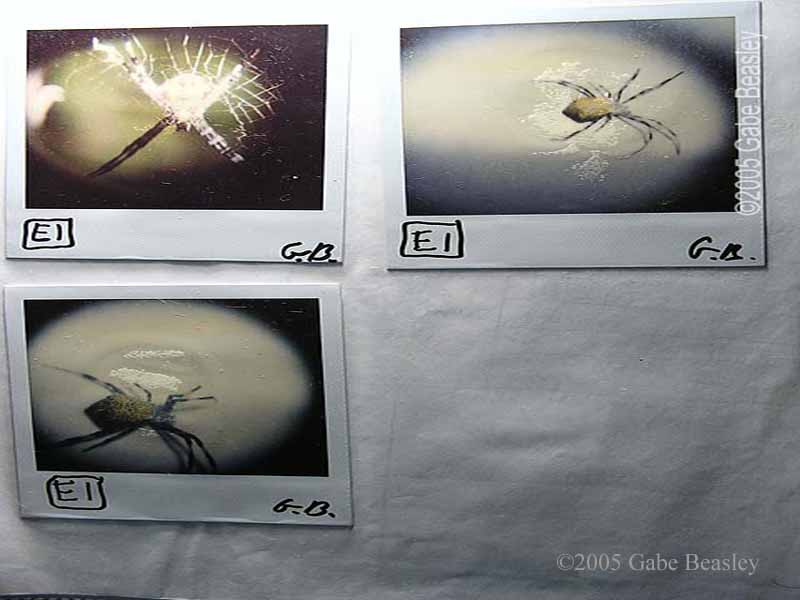
I got started when I wanted to take pictures of the things I loved. Spiders and soon--other things in photography. The idea of capturing a moment in time true to the world rather then drawing it which can leave out details really attracted me to photography. I used my dad's hand lens, then a bunch of old microscope lenses to build a cardboard tube lens which through hours of experiments and tons of expensive film I got the thing to work. Finally--I could take pictures to
describe spiders--and not draw them. I then went to a photo-shop where I found at that time a very good film SLR (digital did not exist then) and asked my dad to help me get it. For the lenses and the camera when it was all said and done I think it was nearly 1000 dollars. Most of my money went twards my education. I'm really glad I have preserved this first book I wrote on spiders--with all the drawings and a few ok pictures--these are the first natural history photos I
ever took.

My Dad really tried and really wanted too--but putting me through the Christian school at the same time was too much and so I never got started with an SLR back then. I would not pick one up and learn until years later. I have traveled all over the world but have never had much money. Nobody was able to fund buying me a thousand or even used 500 dollar camera for my bug pictures. I had other interests--and my photography was in the background-I loved to preserve moments but most of all de-bunk the world of insects and spiders and other animals. Around this same time, I also tried a number of times to build a regular 110 film camera at first just for normal pictures. At that time and through most of my teen years my Uncle and I did not talk very often. My interest in Photography hardly made it to him until 1996. I did not ask him any questions or begin learning from him until 2004.
(back when 110 was nearly as popular as 35mm)

My homemade cameras all failed because at 12 I had very little understanding of optics and shutter control. But able to use lenses from a microscope and some other stuff--I put together that tube lens which enabled me to get Polaroid shots every now and then that turned out. This was very expensive--even back then. But it was worth it to me. Previously--I put white backgrounds on pictures of this same spider and it was not even recognizable as a spider at the distance my camera had to have. At least 4 feet away. It was impossible to photograph spiders with this camera at all until I built that first lens held on with scotch tape, now so many years ago. This turned in me a further interest in photography and film making. I got my first video camera just a year later and made one really good documentary that looks like a collage documentary. It took me two weeks of shooting with my semi-pro camera to get it right--back and fourth between the VCR and editing so it was seamless--but it turned out great. My interests grew--but then you can say--I found what most all teens find when they hit 14-15--serious girlfriends! -and all kinds of other things that slowed my interests until they surfaced again in 1997. Then after my gear was stolen- it has taken me this long to build what I have now here in 2006. Finally really able to work on my hobbies, and now selling some of my pictures professionally. I am planning to start entering them into galleries locally.

This is one of very first pictures I ever took in the field. I've been meaning to finally put some of my old first stuff on my website. Sorry about the problems with quality. The picture here is not the entire Polaroid and is not very good. I simply took a picture of a picture here in the album with a compact camera. I have better shots of my first shots--scanned shots--but the problem is my database. On my computer currently I have over 17,000 that seventeen thousand pictures!

We were not in a snow zone but all the time you need a Jacket. The Big Island has a more diversified number of spiders then any place I've been to except possibly Australia and Java. The spiders got caught on the island and there is a range from very very tropical species to the cold-loving barn spider shown above living there and allot more. I have thought of going back but it's expensive now and it's too bad because back when those Polaroid were taken--I could have had several spiders I found named after me or my family. Now everything in Hawaii has been plundered, discovered, and categorized by thousands of people who call themselves "bug man". That goes for most other places and subjects in the world.
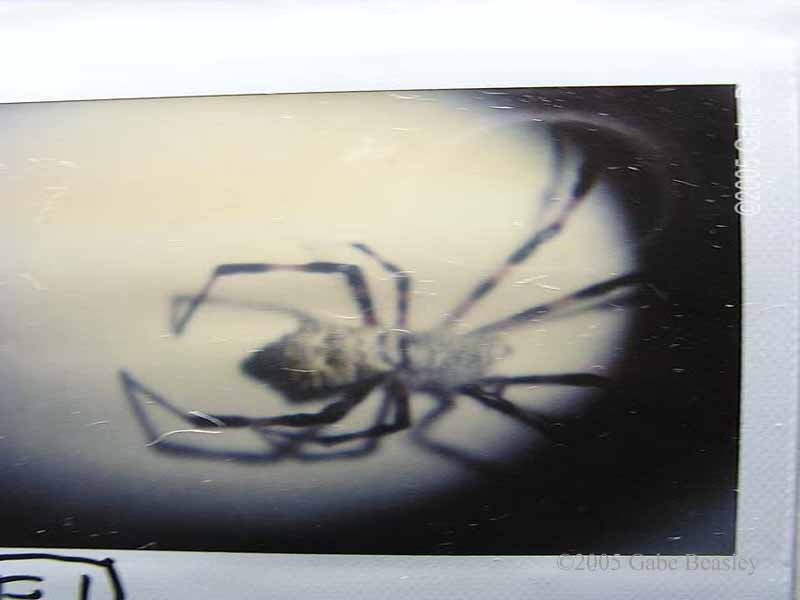


Since I have to take LOTS of pictures to get a good picture I don't change or make file names when they go into my computer. So--in a short time the numbers mean nothing--and I have to go through 17,000 pictures just to find the sequence (series of pictures) or just one picture. People ask why I don't have them organized. Most of them don't know how hard it is to be a digital photographer. I love taking the pictures--I don't like long drawn out computer-work. It gets very complex with my photo-viewing programs and other things to name every file--it would eliminate many possibilities and drain my time. I've tried to make categorized pictures.
The way that the camera stores them is the way my computer uses them so trying to move or name each one would take a very long time and would be very frustrating. I have rudimentary places I put files--but to make a clean photo album for a mega-picture taker like me would take way more work then I am willing to do. So I settle for the fact that I found it. This shot looks more blurry then it should because it was photographed in an album and I admit done quickly and not scanned. 17,000 pictures is frustrating to just find one. I'm working on a way to
organize them better.


This strange picture was taken on one of my train trips. It is lights--shot in black and white--moving so quickly that they look like human spider webs or lightning. These kinds of pictures can get really good if you play around with them for a while.


I said I would keep putting spider pictures on my website and here again is another one. It's been so cold here in The Dalles most spiders are hard to find. I have however two spider shots with my new camera I plan on posting soon. This is a shot to tell you spider people that I'm changing the name but I still remain very interested in spider pictures. This is one of my favorite species. Called the Barn spider, I first found them on the Big Island of Hawaii where I used to live and where those two above Polaroid were taken. This spider need cool climates to live--so we had to go all the way up the mountains where it's cold in Hawaii (and yes, incredibly it does snow up there on the Big Island) to find them. We were not in a snow zone but all the time you need a Jacket. The Big Island has a more diversified number of spiders then any place I've been to except possibly Australia and Java. The spiders got caught on the island and there is a range from very very tropical species to the cold-loving barn spider shown above living there and allot more. I have thought of going back but it's expensive now and it's too bad because back
when those Polaroid were taken--I could have had several spiders I found named after me or my family. Now everything in Hawaii has been plundered, discovered, and categorized by thousands of people who call themselves "bug man".
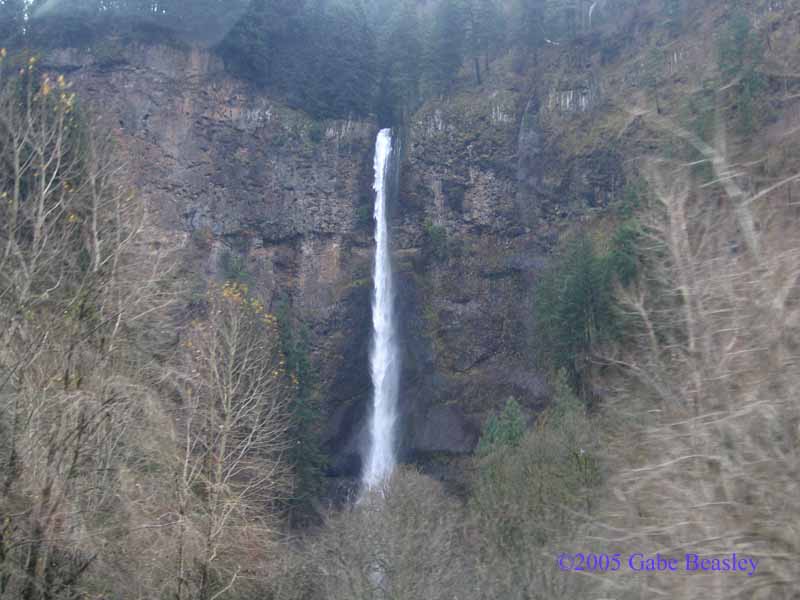
Changing subjects here because I found this picture quickly--
This is an idea of what it's like to drive into The Dalles. One of many rivers that turn into long waterfalls. I thought I would show a shot and a few more shots in the future of where I live--the scenery can be amazing but taking pictures of these waterfalls requires a car and insurance--two things I can't afford right now. That's ok--even though it's freezing cold outside--there is always something to photograph. Instead however I chose to stay inside to compile these Images.
for you.
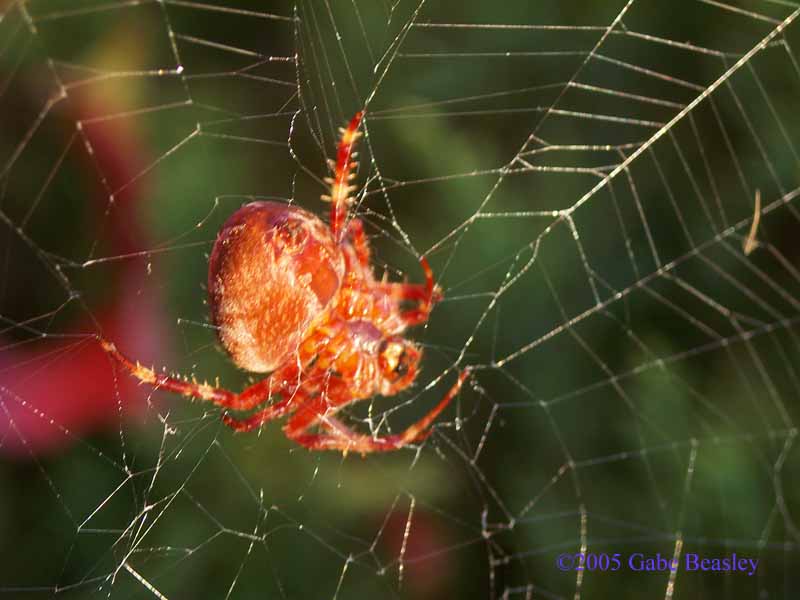

Now this one (I think I already posted it) was a strange find. The same size as a barn spider only less harry and bright--bright red. Now what is this? It's anatomy is very very similar to the barn spider--in fact--I would have believed it's the same species. It might well be. Spiders, like dog breeds and fruit flies and stuff, change. In a relatively short time some spiders living in isolated patches change from there origins to match there environment. It seems possible that this unidentified species is a very close relative of the barn spider. Since some of these species of spider can reproduce--this could be anything. It's colors were spectacular--I have allot more pictures of her I think I already published so check under "all pictures" and use the dates if you want to see it. With at least 200 pictures on this site--sometimes I forget what I published
and did not.

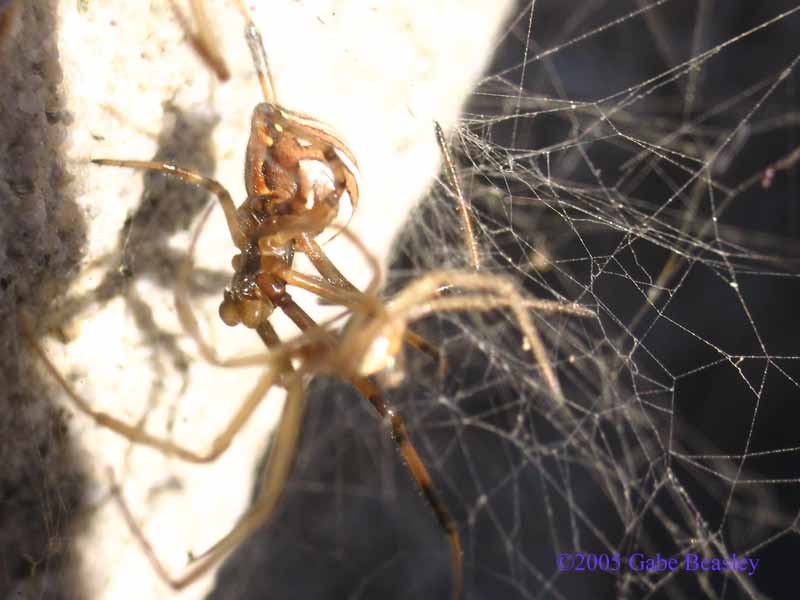
A HUGE MALE WIDOW?? A FREAK! That's not a dead spider next to him, that's a skin shading--he had recently molted. He's growing--which does not make any sense if he's a widow. So here is another odd-ball. A real riddle. This looks to be a classic young black widow--or maybe even a brown or red widow. But those two big balls at the bottom of this spider shows it to be a definite male. I have been taught that male black widows are frail creatures who usually don't even eat--small and ready to die for there mate--they search out females and die young and half starved for the good of there offspring. Some species even literally commit suicide by forcing the female to bite. Nature has done this so that the female can have enough nourishment to lay the eggs. Male black widows have dull-short lives and are very small. This is strange because the above spider is NOT. It's definitely a male--and looks like a member of the
widow family for sure--but I can't figure out what the hell it's doing in it's own web--fed ok--and as large as a female would be at that age. This is no frail spider. I have to admit I don't have many of my old spider books and most of them are out-dated. Spider field guides are rarely made--so this spider might only be identifiable from an expert who knows allot more about northern Californian spiders. I took this shot in the field and I have no idea what this spider is. Clearly it's a member of the widow family--but it may be a while before I find out what kind it is. I admit I could do some more homework on this--and will eventually get too it when I have more time. It really surprised me because in the widdow family males have it about as bad as it gets. I need to go to some of the on-line up-dated field guides to figure out what this is.

Monday, February 06, 2006

ANOTHER WIRE ACT

This is a quick demo showing how easy it can be to remove wires and other things from
an image. I could have also changed the brightness and many other factors. If you
get Photoshop or Photoshop Elements--I strongly recommend that you buy a book as well
as spend a great deal of time just playing around with things. Be sure in JPEG, RAW or
TIFF (especially in JPEG) that you make your original straight from the camera image
loaded onto your computer is immediately BACKED UP onto a CD creating a "digital
negative" that you can always return to is you make mistakes that cause your on-computer
file to become corrupted or edited badly. Backups are the most important computer
skill to learn. Just like saving your negatives. If you use high or fine JPEG and use your
backups correctly you don't have to worry about huge RAW or TIFF files for nearly
everything. JEPG is good enough as long as you know how to use it so that it does
not degrade--the "digital negative" is a "perfect" copy of the original incase you do
degrade it by accident. JPEG degradation usually happens with editing programs.
Even Photoshop has a default JPEG setting of "medium". You have to turn it up to
10 or 12--the highest setting to make certain your file looses little or no data. Each
time the file is accessed and re-saved especially in new or different image editors your
likely to lose aspects of the file. Keeping "digital negatives" is insurance that you will
never lose all. Personally--as CD-Rs and DVD-Rs are venerable to everything from
sunlight to time itself, not to mention dust or scratches in the wrong place--usually
always even in long-backups that last for 10 disks--make a seconded set of disks as
backup. Incase some very important file comes up corrupted. That seconded backup
could save your file as you cannot ever keep all your pictures on your computer.
You may have 40 to 500 gigs--no matter how large your HDD is you will sooner or
later have to start facing the reality of space and the fact that you cannot keep all
your pictures on your computer. So use a method that will last in backups and make
sure that you don't forget your work by making contact sheets so you can see every
immage in your 50,000 or 100,000s of thousands of pictures or more that will not
fit on any HDD.

Computerized "contact sheets" can be done many ways. The most easy is to setup the
files in windows to show thumbnails across the screen. Or--use a photo-organizer that
does it (can be better as this may show dates and other file information). Then use the "Prt Sc"
button (also called the Sys Rq). This will save (in Windows XP) a copy of the desktop
and everything on it to the clipboard. Then open up Paint (in Accessories folder) to
quickly name a JPEG file as each page of thumbnails is saved. Be sure not to save
it in default BMP because a bitmap file will be way to large. Save as JPEG which should
be less then 260k each. That way you can save a small copy of every picture you
ever took. With it if you have the dates displayed on the pictures or near them in a
photo-organizer then it is very easy to look up the date and thus find the disk that
the file is on (or at least narrow down your search to less then a few disks). Weather
you are using CD-R or DVD-R--if you shoot allot of pictures you will soon have a
sizeable number of disks. Keep them in a dry safe place where you keep your film
negatives. Of course I saved this file as a backup and then delete most of the files
I don't like very much--making room for the next ones. But keeping a small thumbnail
view. In the shot below I used Photoshop as I say to remove the power-lines. It takes
some time--a hint here--USE STRAIGHT LINES and keep the brush size right for each
line. Then cover it up in a straight line to avoid serious problems. If done right--further
editing could produce a seamless image you would never guess that any utility lines
exist in it. The "band aid" healing tool is all you need and no duplicate layer is needed.
Click on pictures for full view.

Monday, January 09, 2006

NEW PICTURES JUST IN

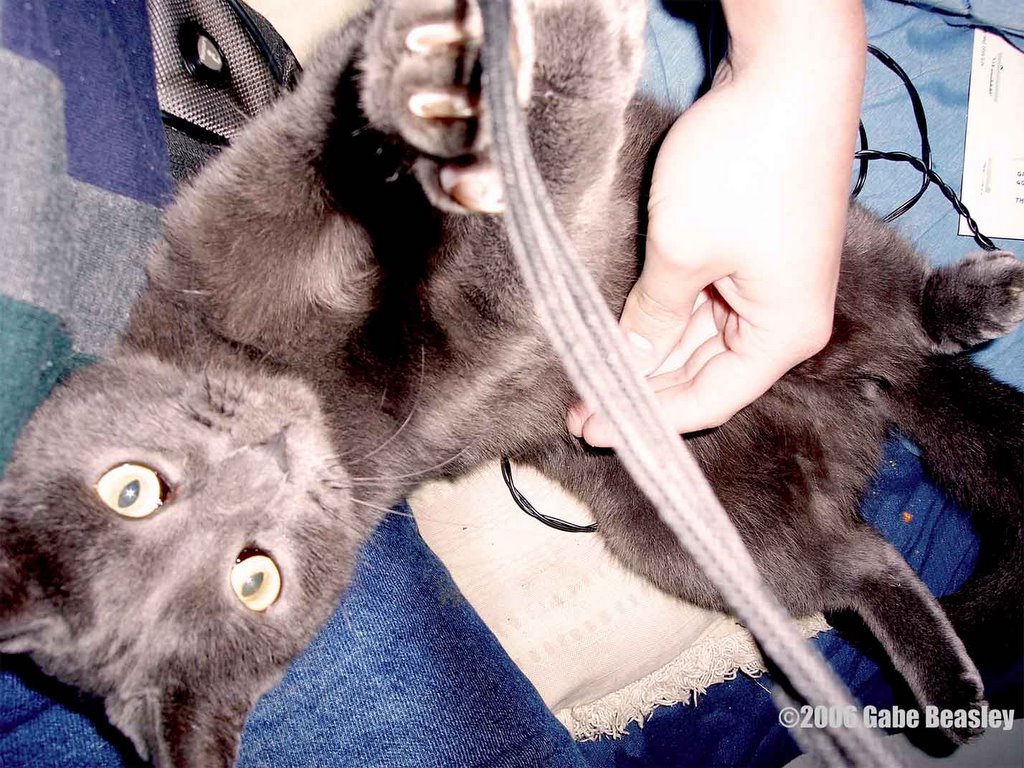
The neighbors cat has become very friendly and I
let him in every now and then. I don't think I've ever
seen a cat picture quite like this one I snapped just
the other day. He has made an impact in some
one of my first digital pictures called Cat Life.

"Cold Night That Shines"-- click on image to see larger view!
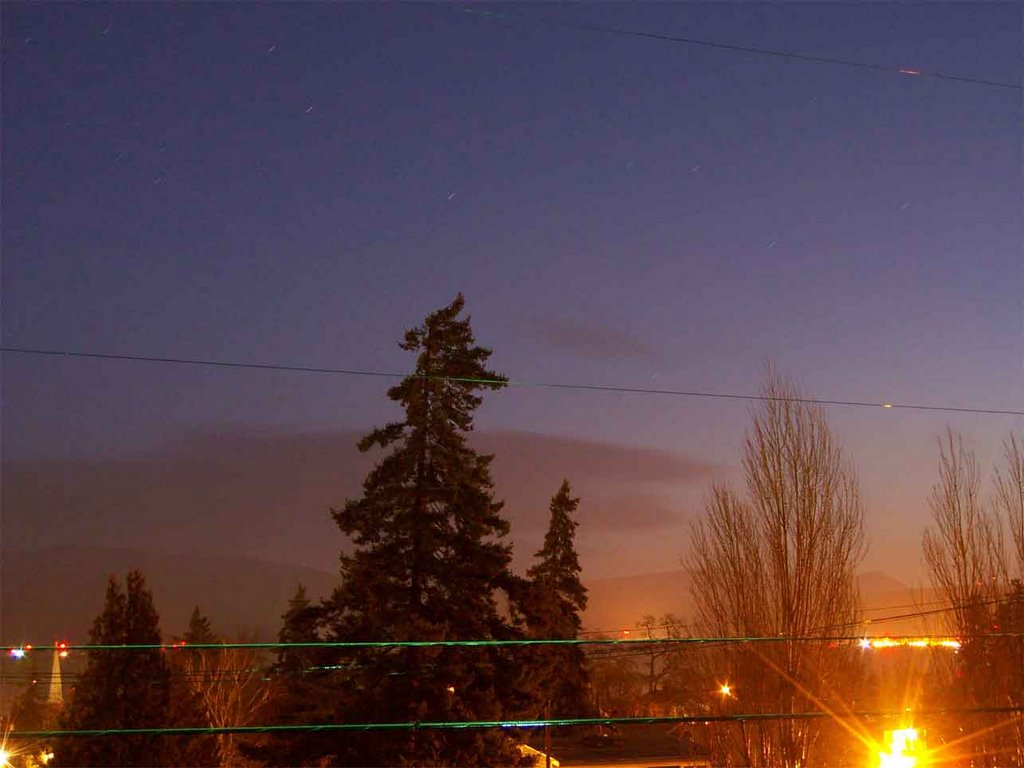
Despite the 35 degree weather I went out and took
some night shots with my DX digital. This is a 45sec
exposure at f2.8 100iso. I was able to get a number
of pictures like this one. The full version is over
5megs large JPEG.

Saturday, December 31, 2005

HAPPY NEW YEARS!!!! --THE HOLIDAYS


MOSTLY MACROS- A WORK IN PROGRESS
I have many articles that I posted quickly and did not edit. I am currently editing old articles and even sometimes adding new pictures to them to re-build my site so that the mistakes and errors can be corrected. Hopefully my efforts will be noticed! I have left my early posts a mess for a long time and this is probably one reason I don't get as much attention as I wanted to. I really did not know how bad the errors were! --G.Beasley 10/9/2011

HAPPY NEW YEARS-- I wish to thank everyone for your compliments and enthusiasm for my work and my website. As an amateur freelance photographer I am very glad to hear my work on this site is being seen and read. Forgive me if I don't always get back to questions or e-mails. I will generally get around to it when I have time. I like taking pictures more then spending the nearly hour per picture it takes to post them here. (when all is done) Anyway--check these out. Keep emails and comments coming-- I'd like to know more about anything so that my work and my name gets out there. I thank everyone who has sent me a comment and hope you all had a great Christmas. Questions, comments, are all welcome. Also don't forget--these pictures are for sale or use by certain public organizations--contact me about any of that.

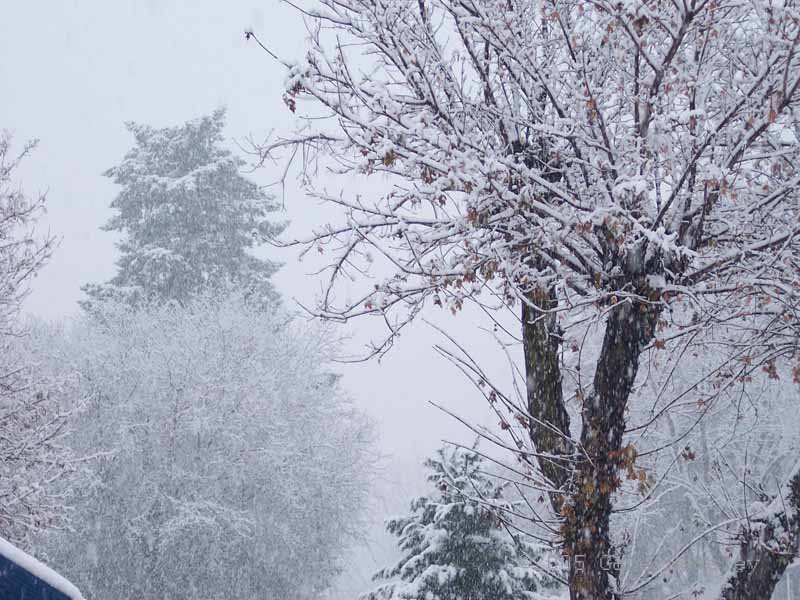
I took this just before I left The Dalles--it was snowing like crazy here. That's one thing I really like about living here. This much does not happen every year, but it's allot of fun when it does. A couple years ago I did video sledding, before I got sick. Not a good idea for me now days.

WINTER before I left--beautiful snow all over. We got over a foot here in The Dalles and it stuck around for a few days. I took A LOT of shots and will keep going through the 100s of pictures 35mm, 120 and digital pictures I took during the holidays. This was the most photogenic holiday season I've ever had. I had allot of fun and even got a wildlife lens (300mm) for my Pentax 35mm cameras. My mentor and uncle Ron Beasley I have to thank for this awesome lens. I'm in the market for a $25 spot-o-matic or Pentax lens SLR clone. If you live in The Dalles and have one that works--drop me an e-mail with a phone number and we can make an arrangement. That's a pretty good deal--the going price on used film SLRs is about $10 bucks to free. If I write the exact address those auto-programs will copy it and send me tons of junk mail. The "dot" is just a period and the AT is of course the @ sign.

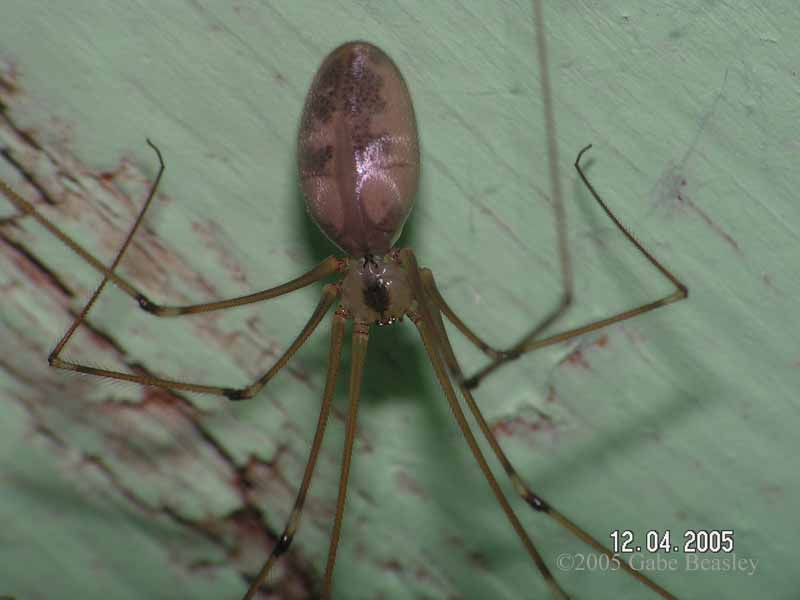
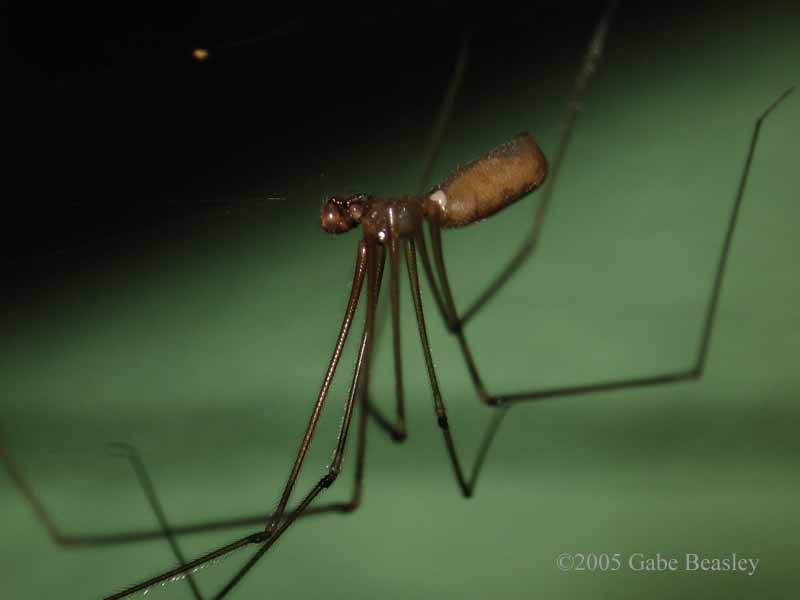
This is a female Pholcus phalangioides in my basement nearly ready to lay eggs. These were some of my first best macro shots taken with a 'point and shoot' 4mp camera. Outfitted of course with a home made macro lens specially attached and devised by me.

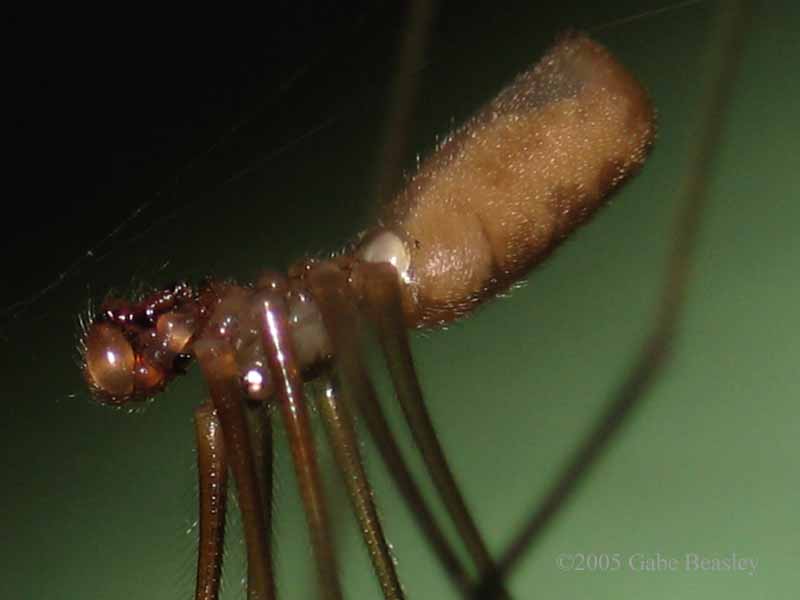
This is the male of the same species, commonly called the 'Daddy long legs'. You can see his enlarged palps which show that this is a male. This trait of "boxing glove" look to the front of all spiders shows that the spider is a male. Contrary to popular myths this does NOT mean they have more poisons and also--the Daddy long legs is NOT the most poison spider in the world by any degree. It is sad that many myths are proliferated about spiders. I have been looking for years and never found a single brown recluse in Oregon. Yet people keep claiming to be bit here. It is not likely they have any substantial populations here. I have met people who truely were bit by the brown recluse spider and seen there scars. The small marks that common species can sometimes make are no complaisant. Hysteria runs ramped and leads to the needless death of way to many species.

Life also goes on in my basement. I plan to write a story about this and the extra-ordinary finds I made about in-door spiders. We need them. The safe ones such as the daddy long legs play a key roll in keeping harmful insects frightening ones such as ear-wigs and furniture eating beetles away from your home. I have the pictures of their webs to prove it. An article for another time.


If my grandma said she could grow a money tree--or a new digital camera--I would believe it. Most all of the flower pictures on my website are hers. She should have her own website but is just not all that interested in computers. My uncle and I do it for her. Despite the cold weather outside and recent snow--her garden patio is climate controlled and she can grow or bloom almost anything. I've never been too interested in flower shots or plants--but I gained a fascination with the complex patterns that flowers have to attract the insects that pollinate them. Some are so selective that only one species of insect can fertilize another flower. The chain of life is fragile. We must continue to increase ways to live on Earth without destroying nature. Other pictures of her flowers are back under "all pictures"

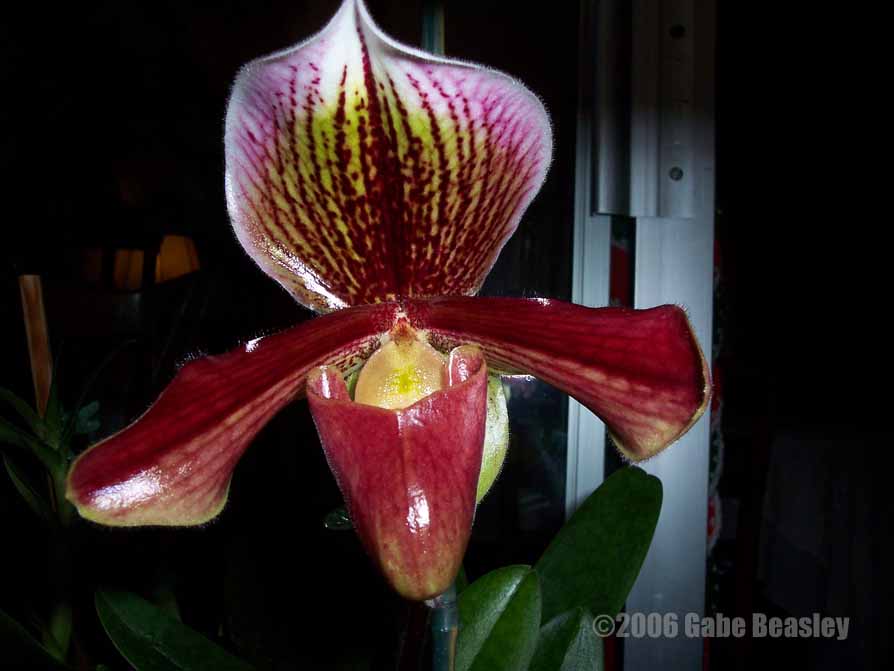
Another Orchid grown by my grandma Beasley in 2005.

And so finally I'm getting home heading towards The Dalles. I was heading past at 60+Mph when I snapped this picture. I only had one chance and got lucky this time to get one of the many incredible falls in the Columbia gorge. I had a great time with my family and enjoyed that very much. Getting home I was able to finally start processing the 100s of holiday pictures I took from several 120 frames to 100s of digital shots. Finally I'm getting some film back tomorrow or so.

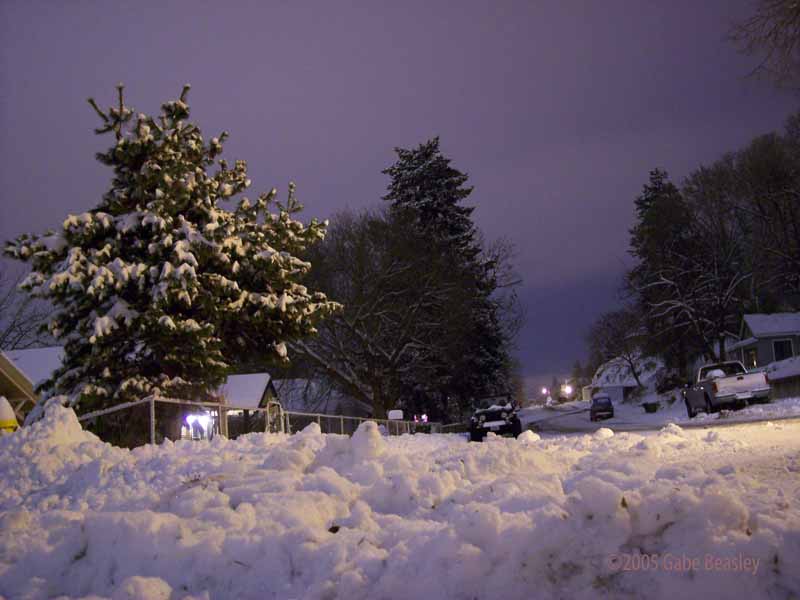
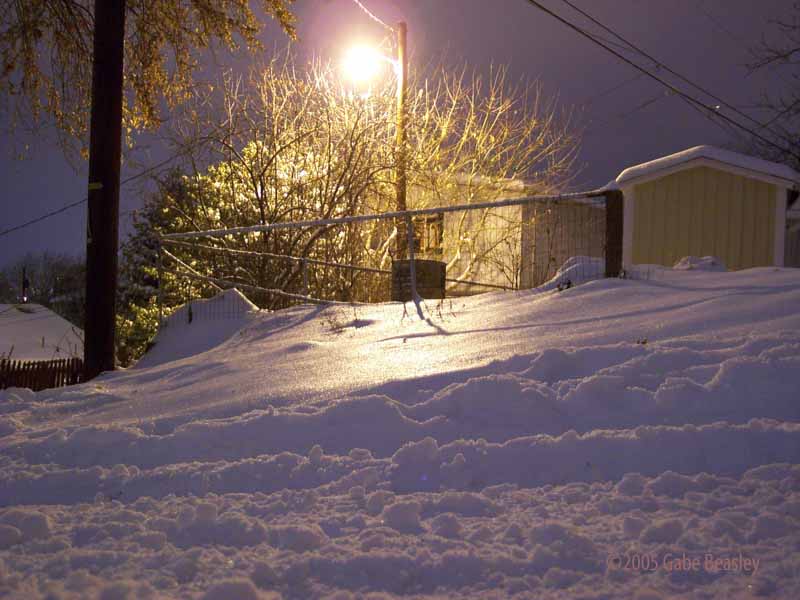
I took this a few weeks ago when I had a foot of snow here which still lingers in some small piles. I went out late at night in the VERY COLD air and shot a large number of long exposures. I'm still going through allot of them. Walking for blocks I looked for some of the nice places to catch snow. I have more of these snow and Christmas light shots I wish to share. All of them were taken at 6.1mp res. I took most of them at 200ISO around 1/4 with a mini-tripod.


And soon there were ice cycles on my house. Looking at them at macro I found them to be very full of "junk" from the roof and runoff. I won't ever eat an ice cycle again as I realize this material consists of a great deal of bird crap. I got more pictures of ice cycles and snow-bound plants but here are a couple I recently converted for my site.


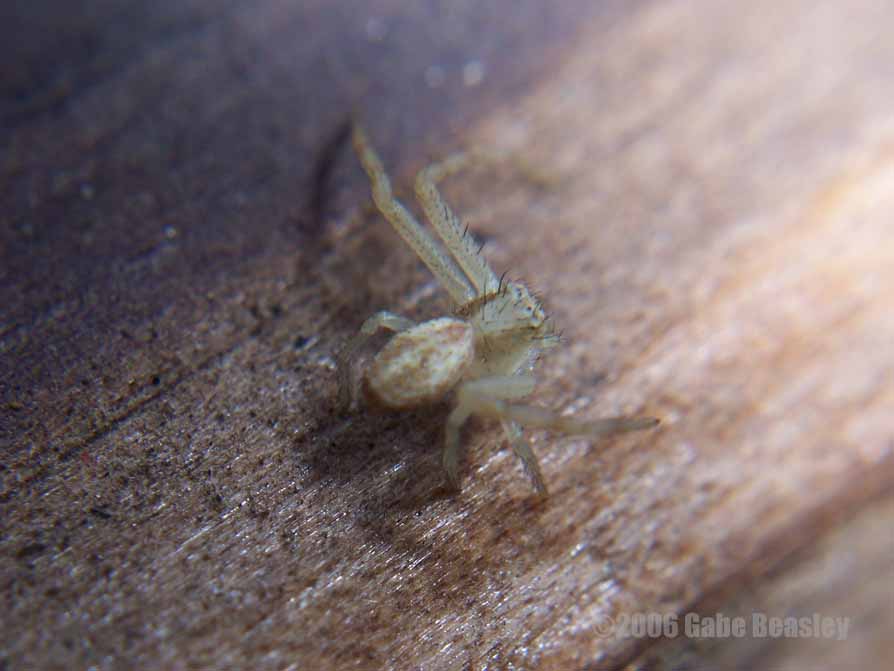
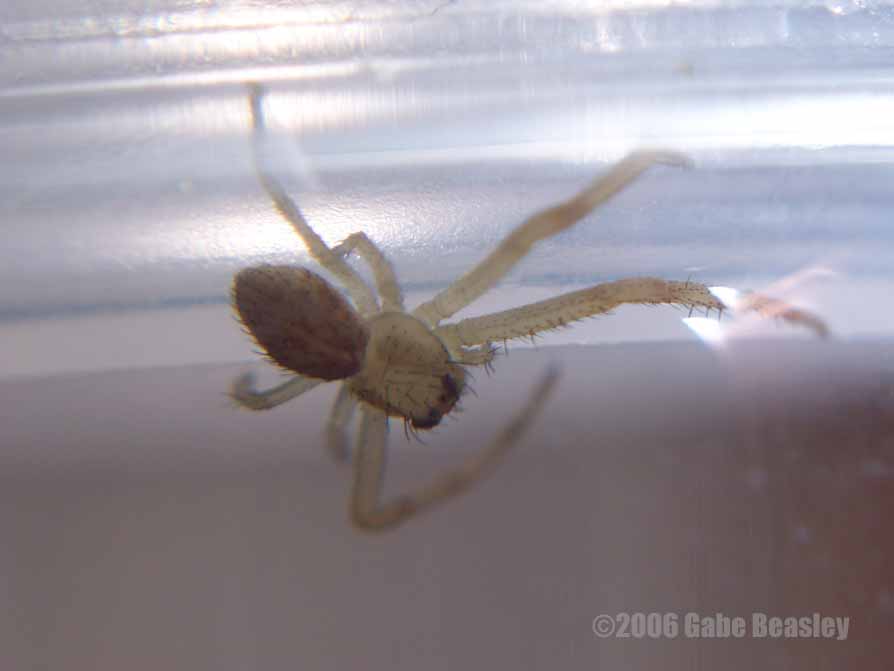
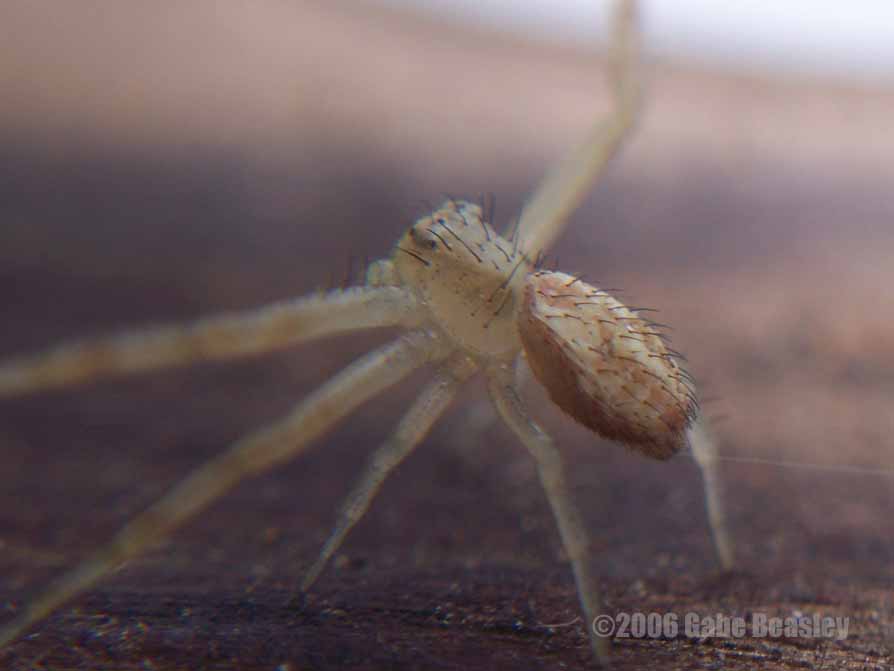
I got two species stranded at my grandma's house. This juvenile crab spider. Because it is literally only one millimeter long the pictures I took of it were difficult. This is nearly microscopic image. The hairs being a highlight of this hunter which I found hatched too late in the year. My dad first found close by another juvenile spider, a jumping spider (below). It too was small. It is the same species on the graphic of my website. I think. It's to small yet to know. I let it go but as yet it will not leave to specimen jar I left outside open. Too cold. These late-hatched spiders are common but the rarely live. It is incredible there are any at all in frigid snow and temperatures. But these were found in Portland where it's a bit less harsh. Still, most of these late-hatch-lings probably die due to lack of food or cold.


Although it is too late to ignore we have a special place in this world, no other animal has ever had. To respect even spiders we need only to recall our own brutality to ourselves and our own desperation's. We are a paradox-- humans are the most giving and compassionate species on Earth but they are also the most horrible and dangerous. Children need to learn from the beginning to respect the natural world. How important and fragile it is. This has never been more important. I've seen research on spiders. How kids react when spiders are shown to kids at different ages. It turns out that we probably have NO genetic disposition to fear spiders. Despite many people saying so. On the contrary, snakes provoke a reaction in small children. The fear of spiders is probably a learned thing engrained from childhood. And we use them to represent our greatest fears and darkest ideas. I often wonder why when we are so much worse if you know the facts. We should view them as they are--part the natural plan. And compared to most things dangerous-- almost harmless-- yet we continue to harm them, and in so doing, our selves. Many more people are struck by lightning every year then are bit by dangerous spiders. Using gloves while working the garden and keeping doors shut can eliminate most problems people have with spiders and there stinging/biting kin. Wasp and bee stings are almost always more dangerous--yet the spider still gets the brunt of our aggression. WHY?
A LYNX spider (Oxyopidae) --New photo added in 2011.
One of many harmless species often MISTAKEN for a brown recluse due to it's sometimes brown body and wondering nature. This spider is yet another garden dwelling species which is not considered dangerous to humans. I myself have been bit by one, it was again not even as bad as bee-sting. This one was found in a garden. The brown recluse has a specific look which can be seen on many websites. If you are trying to identify one you need to not only make sure of the body looks but count the eyes. They have 6 eyes only--and this is one of the critical means that they can be partially identified as there are not very many species of spiders with only six eyes. If you think you have a brown recluse--DON'T jump to conclusions--email me and I should be able to identify it for you. DIRECT EMAIL=mostlymacros@yahoo.com

(Lynx spider) (Oxyopidae) Face on view--click on picture to see eyes in center of screen and use back arrow to return to site.

BAD WEBSITE INFO ON SPIDERS
Treat all spiders with respect, but do not kill them just for the sake of fear. There is a disturbing trend of websites which show pictures of common local brownish spiders and calling them the "brown recluse" to attempt to get you to buy there product with scare tactics! This is false advertizing and WRONG. I have written one of these companies but they have yet to respond to my comment and willingness to provide them with a picture of a real brown recluse. THIS IS NOT A BROWN RECLUSE it is a common beneficial species important to the environment.

HONEY BEES AND SPIDERS --both VERY Important for HUMANITY
More people die of bee-stings each year then spiders. It turns out that the honey bees are dieing out due to new types of pesticides put into the crops and seeds as well as the use of mono-crop agriculture. This is what has caused honey bees to get (CCD) colony collapse disorder. When will we learn that pesticides are not the answerer to dealing with 'pests' and that we must live with the natural world? Poisons snakes, sharks, lighting, you are all more likely to die of that then you are of spider bites. No matter where you live. Yet the honey bee is hardly ever an object of fear and does not usually make our "skin crawl". Why? Because it is vital to our survival as humans obliviously, we do not fear it so? What we often don't realize is spiders are just as
important!

A tiny trash spider (Cyclosa) (Probably in this case a Cyclosa conica)
A serious mosquito eater of the Northwestern forests and many other places.

It is a known scientific yet hard to believe fact that if all spiders were to suddenly largely die off, I don't think humans would last more then about a decade or two. Insects and there diseases would be as big a crisis if not worse then fears of the loss of pollinators like honey bees. Some scientists have calculated that if all spider species were decimated, we would literally be knee deep in insects! And even moreover, cannibalization is not nearly as common in the spider world as most people think. Many species as my recent pics show can get along and reproduce almost with a tenderness. Most species just mate and part ways. Several species actually commit suicide, and in only a few do the males become food for the females to provide extra protein so that she can lay her eggs. Most people have no idea that there are many spider species who live in communities that resemble those of many higher species.


(Above)
This was one small crab spider. I spotted it only because it was near the web of this larger jumping spider my dad pointed out above the table just before Christmas dinner. They were clearly headed for a fight together like this when I found them. One of them nearly had it's own version of Christmas dinner.
(Below)


IN A STAND OFF and or BLISSFULLY UNAWARE- Both spiders are hungry and clearly before I separated them they could have attacked each other for food and territory. The crab spider had found the jumping spider's silk hiding spot. It may not have detected the jumping spider inside--or this could have been a silk-coincidence- probably the hungry and powerfully equipped crab spider was ready to launch an attack on the jumper inside. Since they can release there
limbs at will (legs fall off under stress)--the fight's outcome is by no means certain. Both have a insect/spider-toxic venom. The flower spider probably has the most toxic. But what would have happened here I don't know. I honestly don't know enough about spider on spider attacks as they are rare to see in the wild and unlike some people I refuse to force them in captivity. One thing is clear--crab spiders can bring down bumble bees in flight that are almost four times as large as they are-- and dangerous. The crab spider (flower spider) despite it's small size is a formidable advisory. I doubt the jumper has any immunity to it's venom. This is a forced situation of hunger and not usual pray. We look down on spiders for such savagery. But as a species have we really been much better? Humans on the other hand, in many countries, eat the meat of Primates such as chimps. This is are closest living ancestor. Often this is called "bush meat". Same difference here I figure. I have been to many distant countries and seen the human realty as well as suffering on a terrible scale for myself. I think that it is what humankind does to itself and does not do to help all to often-- makes us the most dangerous, and violent species of animal there is. Yet we judge animals and even other races of humans as being "savage". You know, the latest evidence says that everyone alive today has 600 common ancestors. As hard as that is to believe, it seems a scientific fact. This shows how close we really are to each other and to me is further proof of why compassion and forgiveness--non-violence--should be the attitude for almost all situations. We may be destroying the natural world but we do have an innate ability to see past wrongs we do and others do to us with compassion. We are able to cooperate and somehow and achieve greatness. My favorite countries are the Buddhist ones and I myself have recently become more and more interested in Buddhism. I'm not a pessimist. Someday I hope we go to the stars when we have many things figured out here first. I have no doubt, spiders will find some way to hitch a ride with us.
The daddy long legs--a male. One of the most beneficial and harmless spiders in the world.


Spiders also have a strange caring side. One species I recently read about actually becomes the ultimate mother by committing suicide so that her young can eat her body. Now that is gross--but only one species I know of does it. Several species of male spiders commit suicide for the female by thrusting there abdomen into her fangs! Every time, on purpose to mate and in fact will not even start mating until they have forced there body into the females chrlicera! There is an estimated 35,000 species of spiders and only a very small number of them practice any kind of regular cannibalism. We like to demonize what we fear. Often for good reason. But if we are to survive in the long term we must admit our own history to ourselves and accept all species and there rights to this planet as well. I was absolutely shocked when I found out how cattle are treated. That they never see the light of day--everything is artificial--even sex--and is so discussing I can hardly eat beef. The treatment and slaughtering methods used on cattle and most other animals in western society is far more disgusting then any spider species could ever create or devise.

THE BLACK WIDDOW is a dangerous species. I have pictures in this site in other places as well as a video. Despite her reputation as being a killing widow, she does not have much choice in the matter. If she lets the male free, or he simply goes free, he will die in a matter of hours. Male black widdows are born without feeding organs, thus they live for one reason, to mate with the female and provide her with a meal. Yeah, it being a guy can really suck if your a spider. A great many species harmlessly lock jaws in a display that resmbles kissing to show submission and mate. Even if disterbed I've seen them come back together in what I can only call spider passion! Theres no agression, and little or no danger of a mate becoming a meal.


SPIDERS IN LOVE
Two 'money spiders' going at it! This lasted for as long as I had time to shoot. My camera scared them a couple of times and they broke up only to get back together and go at it again! Catching spiders mating in the wild is a rare thing I have only done twice.


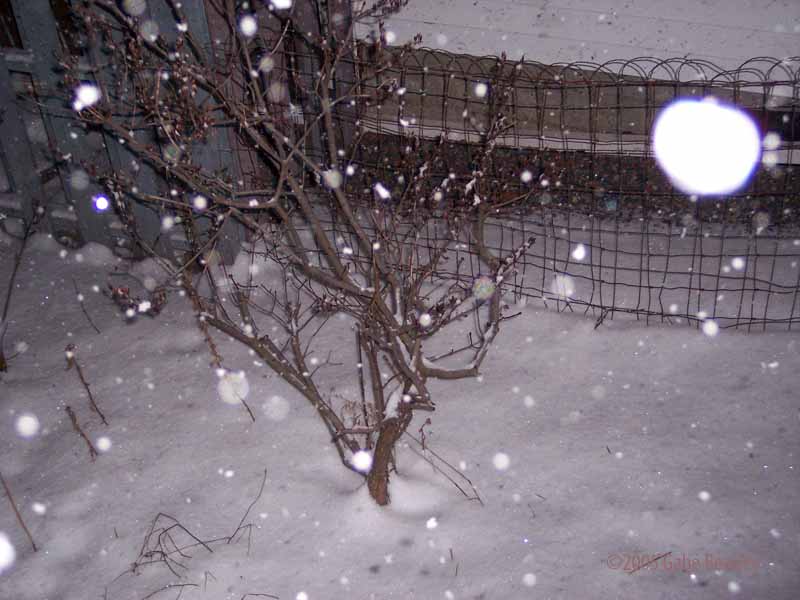
HAUNTED HOLIDAYS? ? You know those shows about ghosts on the Sci-fi channel and the Discovery channels and stuff? Well--here's a photographer's analysis of one of the biggest claims they make. I do believe a bit I guess, in ghosts (or something) for several reasons. Most of it however, is BUNK. The Lockness monster, Bigfoot & UFO abductions are things I have kept an open mind in but don't just believe in because. I'm an open-minded skeptic. I believe that people want to believe so much they miss the fact that they are playing tricks on themselves or having them played on. People love to play pranks or make wild claims about things that they have little or know knowledge of-- like photography-- in this case of so called "orbs". They are usually bugs but often snow or dust particles caught by a photo flash or bright lights are everywhere making them common in photos. I'm not sure where the term came from but it has NOTHING to do with spiders. This is a totally different subject here. My opinion of the un-explained is very skeptical. I usually respect believers. And I don't call people liars. I just know the mind can play funny tricks on you. My travels around the world to over 14 different countries has shown me lots of strange things, some of which I cannot explain. I fully think most people are being truthful about there experiences. It is often actually a trick of some kind or a condition of some kind that they don't understand or know about. An important note here--the picture below is COMPLETELY un-touched by any photo-editing program. I can see how these strange things that appear in pictures could be mistaken for supernatural effects by people who do not know the principles of optics and photography. Get educated before you make a claim about something!


CLICK ON PICTURE FOR LARGER VIEW
I pick up "orbs" on film and digital all the time. Sometimes they are even a nuisance. My video camera in night-vision mode gets them as well when dust particles move around a dark room. As a serious amateur photographer---I know exactly what they are and see them in places you would never think to be "haunted". In fact they are quite easy to make on purpose. Particles, sometimes in the air as dust (in this case small snow flakes out of focus) and sometimes on the lens when the cameras depth of field is right. Either that--or this shot in my neighbors yard is one of the most haunted spots in the world!!!!

HOW TO GET SNOWFLAKES IN YOUR PICTURE
You might want to know how to take pictures of snowflakes. It's VERY easy--even though your flash is useless when taking landscapes or large pictures--it is still good for real close up stuff in it's effective radius both at night and during the day. That includes snow. So as in this picture- a semi-long exposure shot (1/4th-1/15th) a second is added with 1 foreground flash that catches the snowflakes. Most point and shoot cameras have a 'flash always on' mode. This is marked with a lightning bolt. Just turn it on and use normal settings and you will see them. For DSLRs Just turn your flash on and keep your manual settings the same as if you were shooting the trees, house or lights you wanted to get and lock the focus and fire the flash! Also set your f-stop auto or how you want it (larger setting the less your flash will illuminate but the more flakes you may see). I have several shots I've not published yet taken in daylight of snow and as long as it's snowing ok--you can catch the flakes. Basically, you just set your flash to fire when the camera says it's not needed during the day. It will catch the flakes. Happy new years.

Thursday, December 29, 2005

120 Negitives in a cheap scanner

CAN A REGULAR CHEAP SCANNER SCAN NEGITIVES
AND GET ANY KIND OF PRINT OR VISABLE PICTURE?

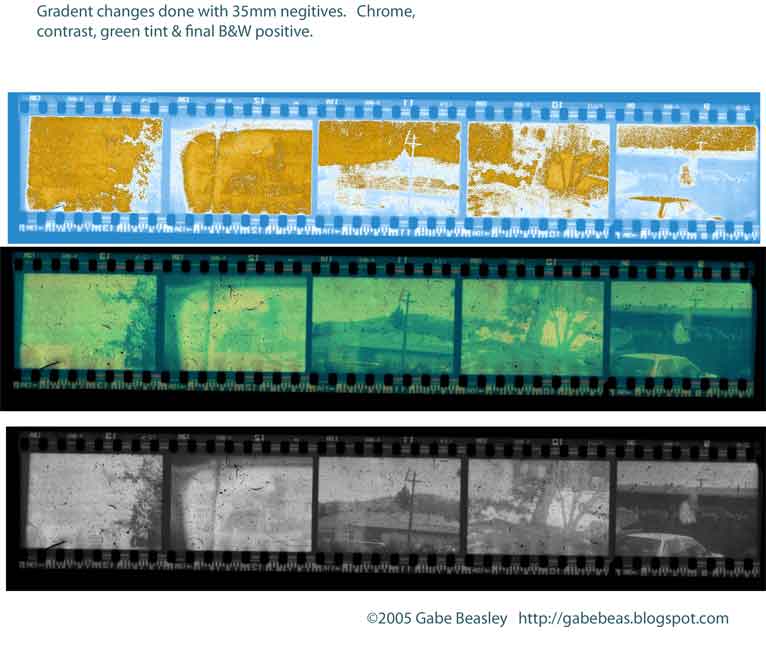
I call it "gradent map photo-filter" process so I don't forget what commands I used in Photoshop to do it.. Sometimes I am fascinated not by new and cool images--but by old rare images produced with modern equipment, old & new or both. Using a simple 1200dpi inexpensive
scanner which does not have transparency capabilities, I created this image and a number of others with these 120 negatives as well as 35mm pictures I took last year. I took the pictures with my 120 film camera this winter in The Dalles. I had the negatives scanned but then
thought--well, I can't scan negatives with this non-transparency capable scanner?

This is what I got with a very DUSTY scanner I forgot to clean. This shows how useful the adjustments can be. Gradent map provides fine adjustments to bring out colors that otherwise can't be seen and contrasts. The middle picture has only been cropped,,
inverted from negative form and balanced with the levels control. The last image is a black and white one created with the Gradent map and a photo filter. This is as crude as it gets--I slapped the negatives in this dusty old scanner I've not used in months and scanned them. At first I was not going to do a show of 35mm but I thought since most people only have 35mm ability. It would be right to show what can be done with it and that you don't need an expensive 120 camera to do this stuff. The dust could seriously have been omitted here. I left it in, almost on purpose.

Being one who defies convention and the word "can't" I of course, I had to give it a try. I knew Photoshop had enough tricks to do something with a scanned image of negatives. And I knew light had to react to the negatives somehow. So I did it. First at 200dpi then at a much better 400dpi. When ever you are scanning negatives--you usually want lots of dpi. 120 roll film is usually scanned at I believe thousands of dpi--it takes a lot of time. My simple scans were quick and made for no more of a print then a 20x30 at most or whatever--but this is art, not science
photography--so who knows how big prints could get and be worth printing. If it is worth printing at all.

I thought this was another cool strange process I came up with to defy convention yet again. As I often have, or tried to, do because of a low budget and to see how far I can go on it. Had I been born a rich photographer I'd probably be "in the box" with my creativity, limited to copying what is supposed to be "photography" with massively expensive gear to die for but little understanding of the mechanics and what it's like have to push the limits or to find new things and figure out the technical end of things for myself. Had I done so many of my pictures may not have been possible. I'm glad in a way that I was forced to start out on a low budget because
it started a thinking in me that I doubt will end no matter how much gear or money I have in the future.

To be on the budget I am and have no other choices and thus create options that apparently are impossible because I had to, started a thinking machine in my mind. Creativity is not just in your abilities, it is also connected to your limits. In other words--I might well have been a far more dull photographer and not had nearly as much fun had I had everything I ever wanted. But now it's time to get all the gear I ever wanted. (I WISH)

Anyhow--This old scanner was about 20 bucks at a thrift store--new in the box. I was surprised at what I found when I did some playing around in Photoshop. After I scanned these 120 negatives. I also scanned 35mm negatives and got similar results--they were good--but for purposes of preferences and ease here I chose to use the much larger 120 format. Below is thescaned 120 negatives with no editing at all. They have not even been flipped so they look correct.


Once the negatives are scanned of course you see only a slight trace of the image even if the negatives are under-exposed. You have to do some work in Photoshop to see anything, crop and rotate to view, and then the levels control was first on my list. I finally chose this sepia
chromatic look to it because it was a side effect--not done by me. The color scanner had trouble distinguishing colors (at least with my first few tries here) in the transparent negative. I believe it is not very possible to get color positives out of this due to the intermix of light
which happens inside the scanner itself. (I'm not sure about this) This scanner was not built to scan negatives, or course. To do that you need a very different more expensive scanner with a light on both sides to get the transparency rather then a backwash of light
from the reflective lid.

What I did with Photoshop was pretty simple--I went to levels control and then photo-filter default and I was able to obtain a tainted but good image from the negatives which had accumulated a ton of dust from this scanner I pulled out of one of my gear piles--
making them look nice and old. I did not clean the thing before I tried this. I just scanned. And got a strange mix of reality and film and technology which made me think of early
photography and strangely shaped long prints. So I chose to take the entire sequence of 120 negatives that could fit in my scanner and make it into one file. I then reduced it for my website and there it is. I used a neat tool in Photoshop called "Gradient map" and "photo-filter" to produce clear positive images from these color negatives. Using other processes I was able to produce semi- color positives. It's a simple matter of inverting the scanned image of course and then adjusting levels and possibly a few other things. I think with even more tweaking if I really wanted too--I could scan these at several hundred dpi and produce a printable clear image
which has retained some of it's color and most of it's sharpness. It's hard to beleave these picrtures were taken only a couple of weeks ago when it snowed here in The Dalles.

(120 finished)


BE SURE TO CLICK ON THIS PICTURE TO SEE IT LARGER.

I WAS ABLE TO PULL THIS MUCH DETAIL IN LESS THEN AN HOUR. HOW MUCH COULD YOU REALLY GET EXPLOREING PHOTOSHOP (or Photoshop Eliments?) (this image was not enhanced and by drawing or adding anything to it--it's straight from the negative source negative.

It is clear that trying to scan your negatives with a simple document scanner is not something you will get great results from. But sometimes you can be surprised at what results you do get--and the expressions you might get from them. At best--I could have cut and re-positioned
the positives I made and made nice B&W pictures out of it with more then expected detail. I think this trick is far more for the art and an interesting thing to play with then to practically try to use. But if you are in a bind--it is possible with Photoshop to scan your negatives with a CLEANED cheap one-sided scanner that "can't do transparencies" and pull out your image as well as make it a positive. If you scan it at very high DPI then you could get at least a reasonable picture although it would be the same mix of Frankenstein parts and processes I've used to
make the other strange pictures I've done here. Definitely not your usual nice 120 portrait- or even close! However, when scanned at higher res a surprising amount of detail can be found and pulled out of the image with some Photoshop work.

Have fun--if you got a scanner--even a really old one--you can do this too--just up your dpi and it can be done with 35mm negatives as well. Be sure not to scratch your negatives and just dust off your scanners DON'T use Windex! So yes--a regular scanner can scan negatives and
make a positive print. You might find at best to get a two color or more of a black or sepia like image. But it can be done--and quickly. This is mainly an artistic process--definitely not a way to get anything out of your 120 or any other pictures. A note here--these 120 images
I took just a couple weeks ago turned out very well in print form so you can reference that to the quality displayed here. I could have done a lot more to sharpen and highlight this image or crop into at high dpi. There are countless variations on this and I would not surprised if long experiments got ok color images from negatives. But you will never get close to doing what a real transparency scanner can do--so don't get your hopes up thinking you can make prints
with this that are anything more then experiments or fun projects.

Don't forget though--you can't start any of this stuff without choosing the "invert" option in Photoshop so that your negatives become positives, more or less. I used "high quality color scan" with this 20 dollar simple scanner. Have fun-

NEWS

HAPPY NEW YEARS---Glad to here from all of you and hope you all had a great Christmas. I got started on a project here and I could not stop until I had it on my site. This is a technical idea I came up with that's another expression of old and new technology art created just to say it could be done. There are more snow pictures from here and I have about literally 5000 pictures backlogged for this site. Literally. I got a lot of work to do on this so give me some time. If you like my site be sure to come back in a couple weeks or so and see if there is new stuff. I'm surprised at how many people think it's just "finished" and is not a growing thing. No--it will not be "finished" probably ever. A Blog and website like this is a growing added too thing that just gets bigger as I add new photos and articles. Also--go back to the first four months or so for the most new pictures--I've seen that it can be confusing as you see the same shots at first when clicking on the all pictures menus. Take it way back in time to see new stuff right away.


I have a ton of pictures to put on my site. Give me some time. I had a lot happening during the holidays and finally got back. Now I’m going to California again but I plan to post a whole bunch of new shots before then. I'm getting back in the grove. NOTICE TO PSE USERS--if you use Adobe Photoshop Elements and it ever gives you an error message about the "Styles" file being "bad or corrupt". DELETE THE PREFS and ALL THE PSE marked directories in files. It is easy if you know your way around Windows. This nightmare message that does not respond to-re-installing the software has been brought to my attention and I found the fix. This problem may not be limited to PSE and may well extent to CS & CS2 as well as earlier and newer versions of PSE. SPELLING PROBLEMS- Spelling has been an issue I've been working on here. I was not much of a writer before I started my website. Therefore I've kind of re-learned how to do it. My spelling when I first started this site was horrible and I know it. Please ignore that for now. I'm more interested in future pictures then I am cleaning that up but I may get around to it someday. Sorry about that. My spelling has gotten better and better as I write more and use a more advanced spell-check program then I had back then. I graduated in 1996. It's been a long time since I did anything like this or written much so thanks for your understanding. Please ignore it as this site is mainly about pictures, and not words.

I got allot of winter pictures!!!! First this-


Friday, December 02, 2005

The Snow Train

SNOW TRAIN
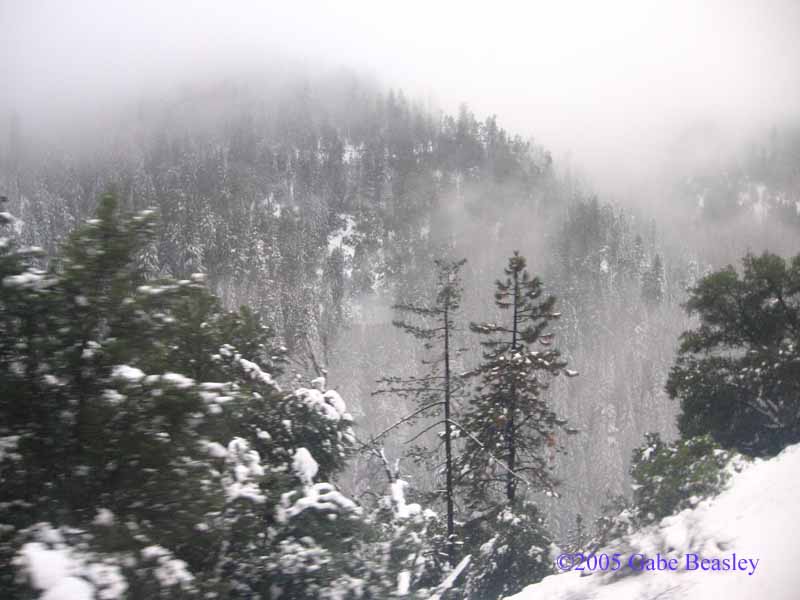
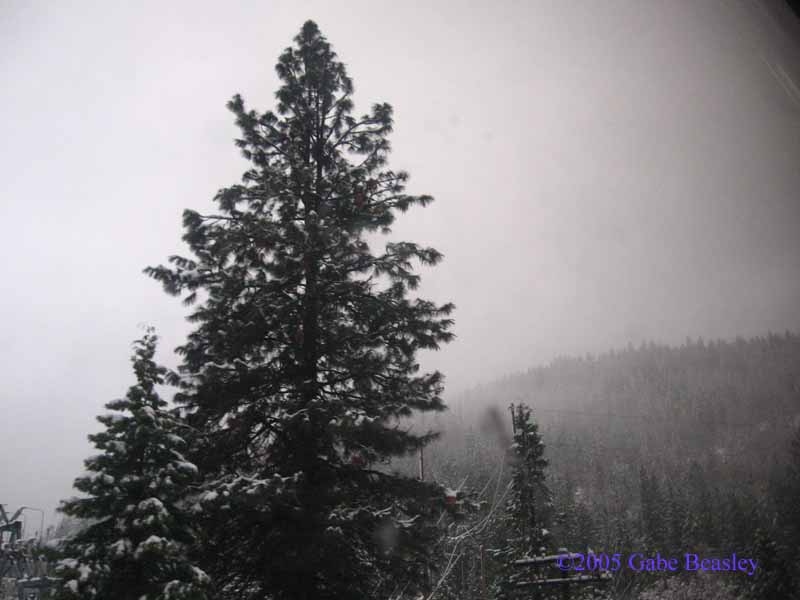
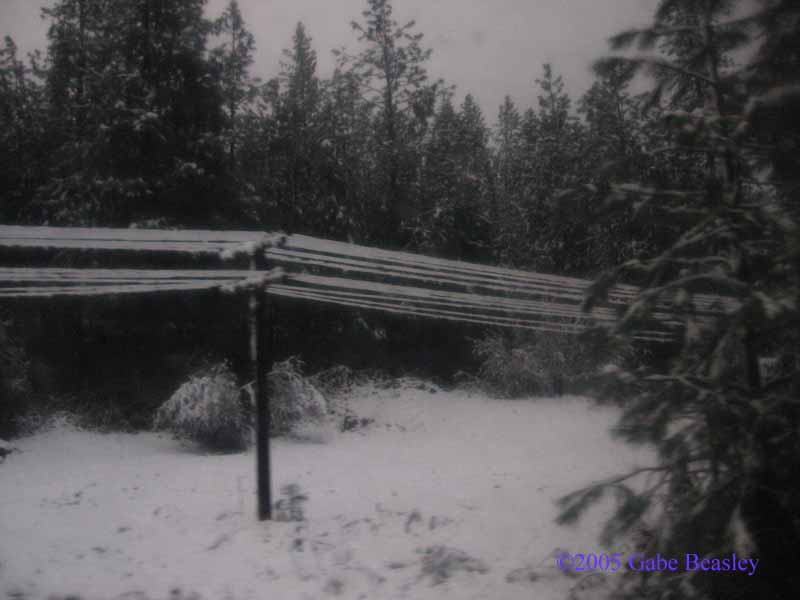
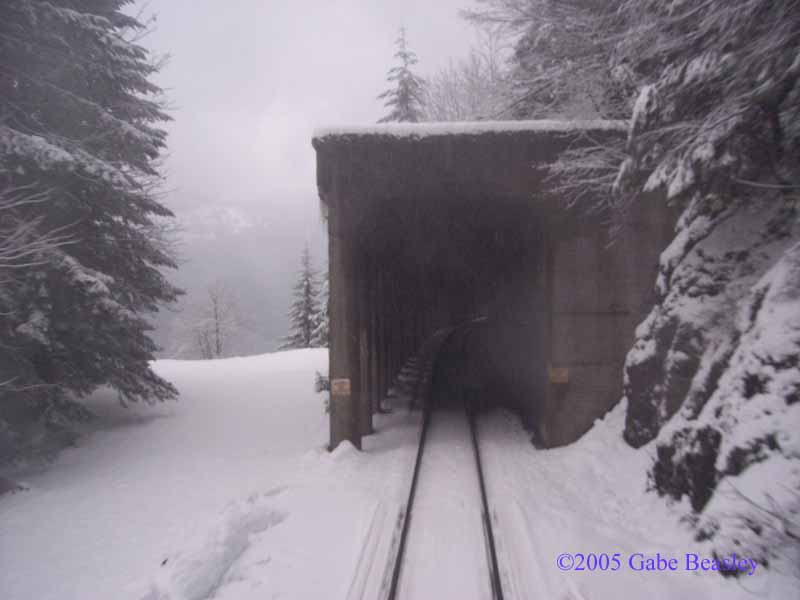
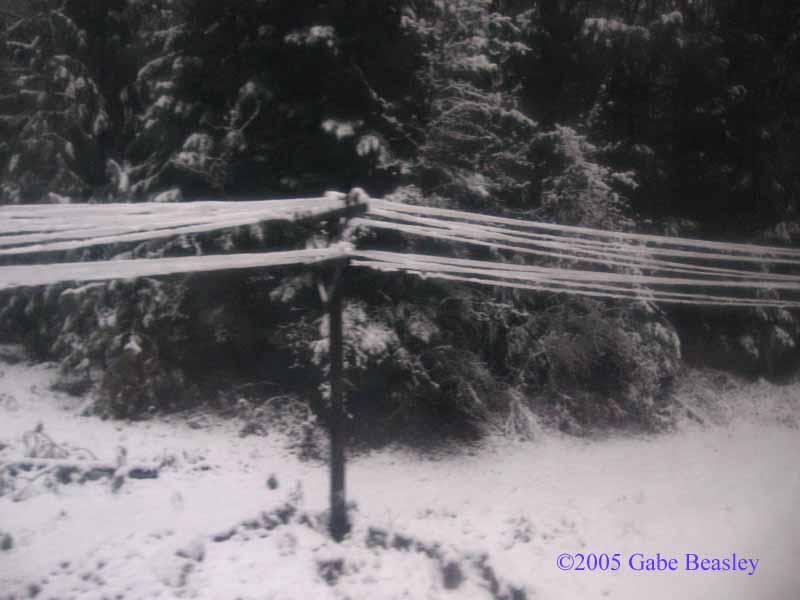
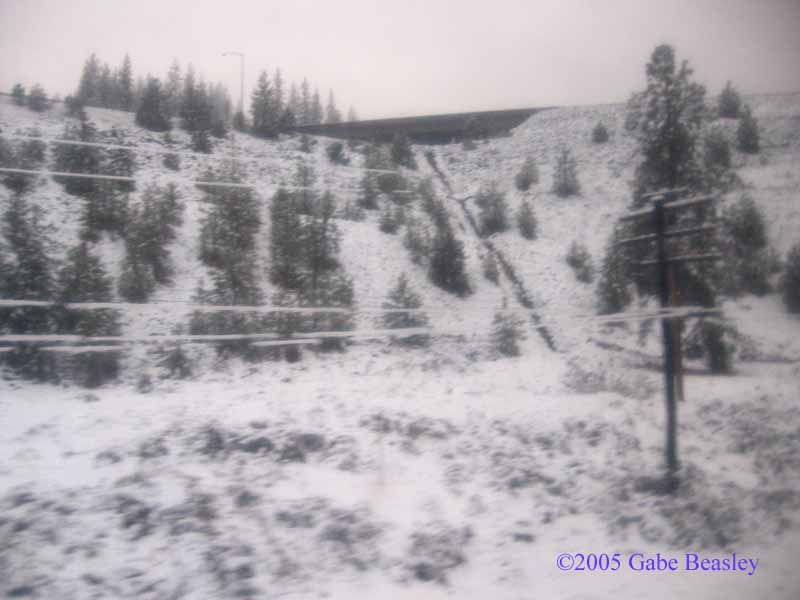
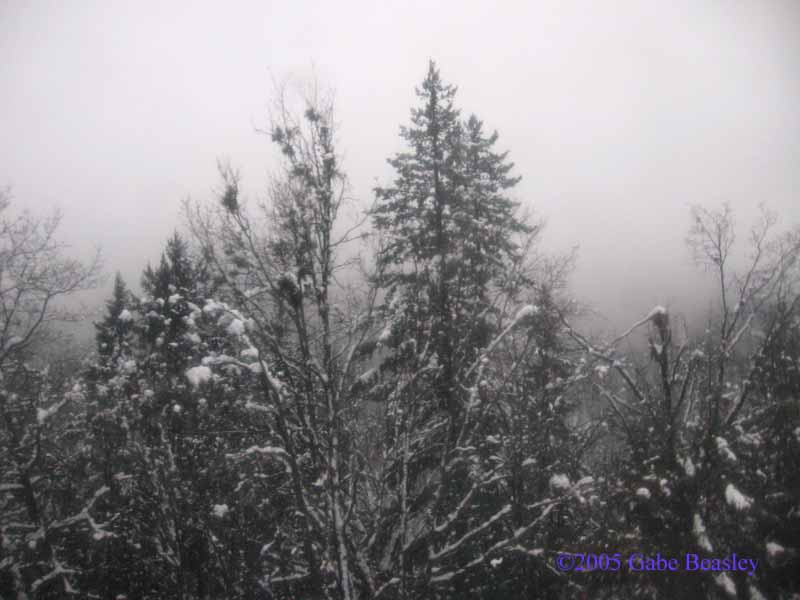
In addition to being able to sit in the 110VAC provided car in the back with the crew, and shooting out the very back of the train, we had many stops for a number of reasons. There was very cold weather, and many freight trains we had to yield too. This delays most people got mad at. I was very pleased. Our snow-speed was only about 25-40mph. My GPS worked most of the way. Because of the stops and slow speeds, I was able to capture unique pictures I am amazed at getting. I also have to thank the Cannon A520. If it were not for it's speed, reliability, accuracy and flexibility while taking pictures--I would not have gotten many of them.

CAMERA OVERLOAD!
I was running two digitals, my DX-for the big details and the A520 and two film cameras. One I'm testing. I had enough time to get in shots with all of them. Usually this is a stupid move. You should devote most of your time to one or two cameras. If you try to capture the same shot with several cameras you will probably get garbage pictures. At least my mind, can't handle all those settings and conditions.

RECOMMENDED COMPACT DIGITAL CAMERA (Above A520 shot-low light) This little pocket-rocket manual digital camera comes highly recommended by me for those of you who can't afford a digital SLR. With a 1gig card I get around 400 pictures, a computer remote link standard which lets you take time-laps and even have complete manual control over the camera on your computer, and great shots with almost no shutter lag. To top it all off the price is now under $200. Have some trust in a 4mp camera with a kick. 4mp at 180dpi is pretty good. You can make a sizeable print if your smart about it. Lots of color modes, histograms and other features puts this camera close to some of the DSLRs. Complete with lenses for macro, teli-photo-and several others. It's the best adapter system I have ever seen. It is an ultimate snapshot camera with a serious twist. It's Cannon's newest.
There is a high and low end model. The A510 is 3.2mp and I don't know if it has as many features but I'm guessing it does. It runs for about $130. And the A520--a near-35mm comparable 4mp system you can put in your pocket. Heck, they even make an underwater housing for both of them! I can't think of all the features this powerful compact has. Right now I see it in most of the stores--if you got 200 bucks in Christmas money--check it out. Many of the snow shots in motion where shot with this camera. I'm tired--so I did not touch any of these pictures with Photoshop other then add my mark. These are all straight of the camera as most of my shots are. (Below A520 shots--low light and in motion)

What you see here will be film and digital--6mp and 4mp. I downsize my on line files considerably--but my new system of doing this permits better close views. Don't forget to click on the pictures for larger view.


With the outlet I could proof right on the train. It was a great setup. The whole trip up took about 28 hours. About half in the dark and half in the day because of delays this time. Up in the very frozen mountains--all the way to central Oregon, there was tons of snow--breaking into high desert which made for fantastic landscapes at a distance with my DX.

A quick reminder of the dangers in such travel--an entire number of freight cars that went over the side. Some of those turns were pretty frightening up over the mountains. I kept imagining the early days of rail--when 1000s met there death in horrific crashes up here. Back then--lack of communication and technological factors made any train wreak about as survivable as today's jumbo-jet crashes. Usually only a handful of people of 100s lived, much of this was due to fire
and wood. The wooden cars made over 100 years ago were death traps of fire and splinters. They shattered like matchsticks and killed everyone inside. If you were not dead out right--you were sure to burn.

A quick reminder of the dangers in such travel--an entire number of freight cars that went over the side. Some of those turns were pretty frightening up over the mountains. I kept imagining the early days of rail--when 1000s met there death in horrific crashes up here. Back then--lack of communication and technological factors made any train wreak about as survivable as today's jumbo-jet crashes. Usually only a handful of people of 100s lived, much of this was due to fire
and wood. The wooden cars made over 100 years ago were death traps of fire and splinters. They shattered like matchsticks and killed everyone inside. If you were not dead out right--you were sure to burn.
Now days--the chances of going off track or hitting another train is very un-likely. I don't like to fly. Even when I half too. My camera gear is a hit with security. They want to see anything and everything I've mcgivered together. It makes air travel for me an extra 4 hours long at least. So if I can take the train where security is not so extreme--I do! Not only that you can usually find a seat you want. Two seats
to yourself or at least one with a view or outlet. The observation car is great for pictures sometimes, and there is food and plenty of time to stretch your legs. The night-train is a couple hundred less then they day-time version because of the scenic situation. I recommend it to anybody who does not want to deal with airports, lines, long searches and other such things that drive you crazy.

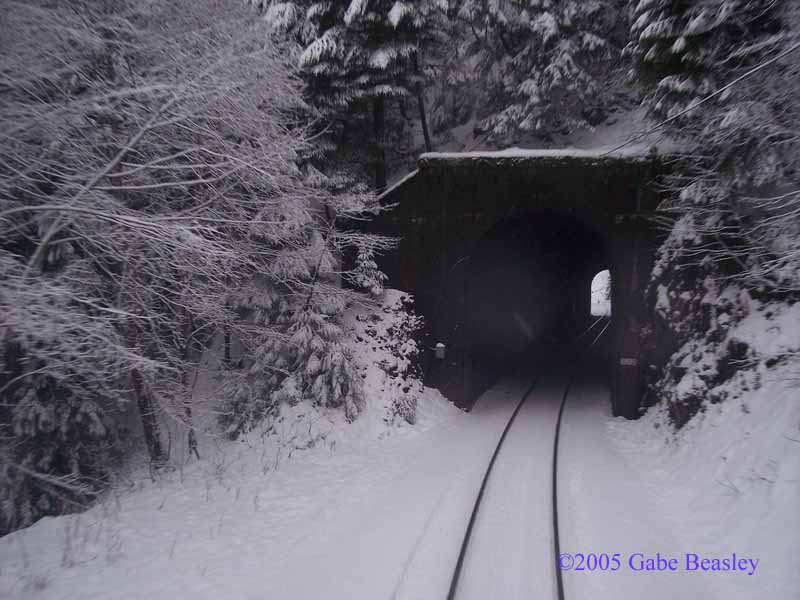
Every time I go into a plane I wonder how the hell this can happen accurately every time. Had I not flown all over the world--I would not believe it. Despite the fact that it's statically more dangerous to take the train, I like being on the ground--especially now days. The night train is cheaper then flying from Portland to San Jose. It's real name is the Cost starlight, the night-time version of a day-time I have several rare shots of the tunnels up in the mountains
I got out of the back of the train as above--some of them very old. I have not converted them yet for my website.

Thursday, December 01, 2005

I'M BACK!

I'm back, from a really nice trip to San Jose California to see my dad and step mom. I shot over 9GB of pictures on the trip, including a rare opportunity to be in the back of the train with the crew, capturing the tunnels up in the hills as we went through them. And getting un-restricted access to take pictures through the cleanest glass on the train as well as open windows in some cases. I've never seen such incredible snow. That is only one of the incredible things I got to find on this trip.


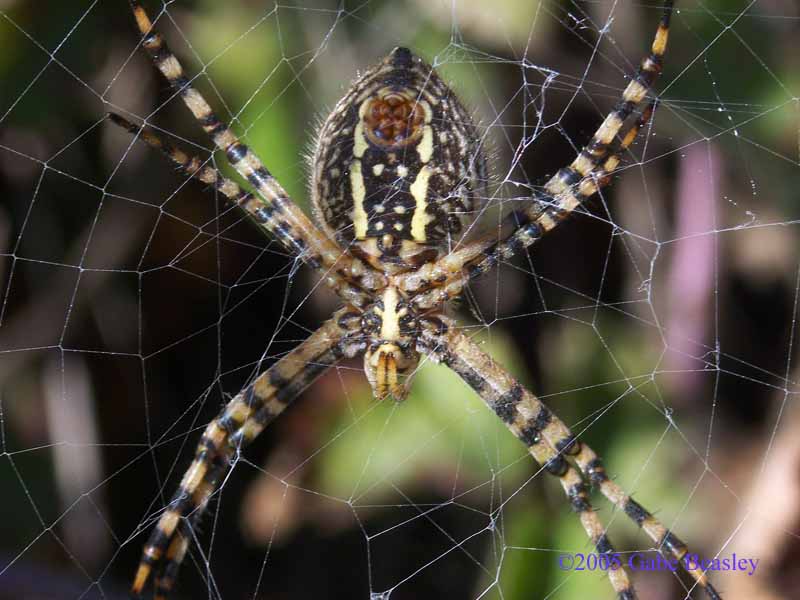
Common name-zig-zag spider, garden spider, Banded spider and The Banded
Argiope (above) Argiope trifasciata

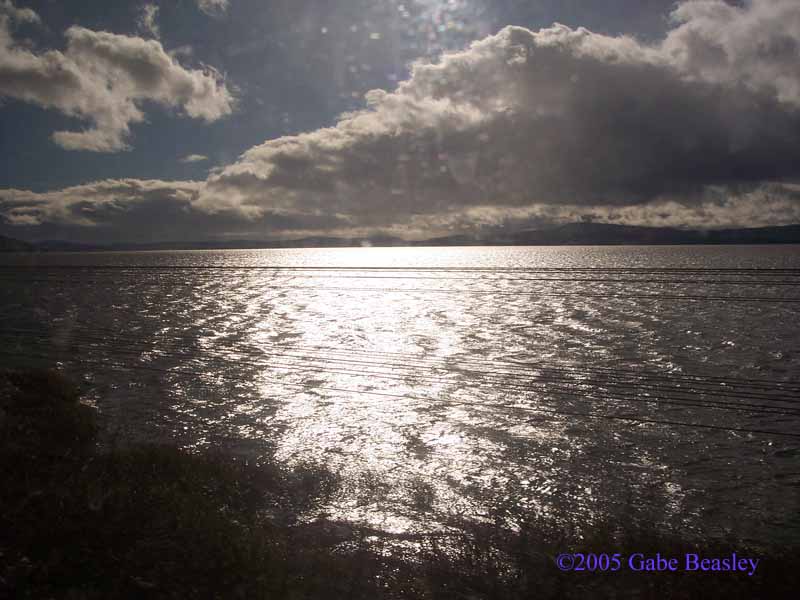
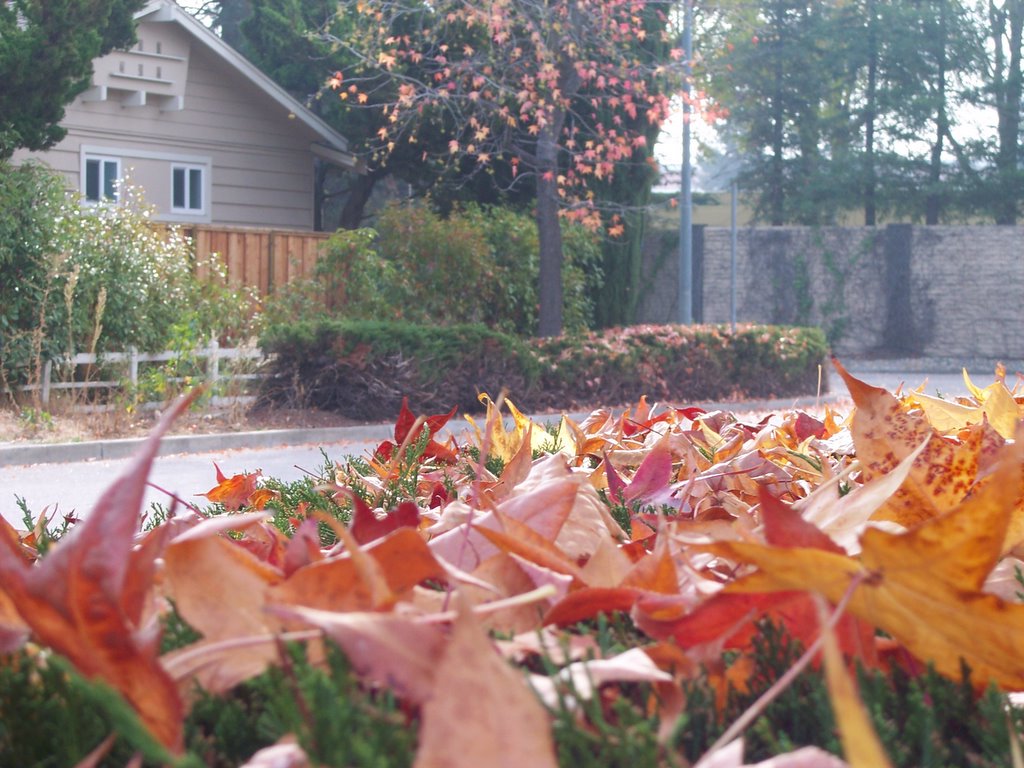
It will take me a while But many more pictures are coming--I shot thousands. Here is a taste of a few things I'd like to show you. I want to show is the shots I got here in The Dalles and then in San Jose of the weather--the train trip was most incredible. I took Amtrack from Portland to San Jose and back. The return trip was well worth it for the pictures many times over.


It was sunny the entire time there, making a fantastic lighting setup. I used
both 35mm film and digital on this trip. This was one of the most productive and exiting photographic trips I have had. The chance to shoot scenic shots of places that many people never see--as you will see--and finding a diverse number of spiders living in San Jose--really gave me a lot of reasons to shoot nearly 10GB of digital pictures alone!

This is Big Basin. In the Redwoods, only a couple hours outside San Jose.

From the sun on the way down and on the trip to the snow storm that started when I got home--this was an incredible trip, personally and photographically. It's hard to believe these pictures were shot just a few days and even less apart.

I got a lot of work to do--so give me some time to get all this on my site…coming up as I get the pictures processed for my site. I did not chose the above as my "best" shots. The database is two huge. But keep checking if you want to see more---I have enough to keep me busy all winter with more coming over the holidays when I go to Portland again.